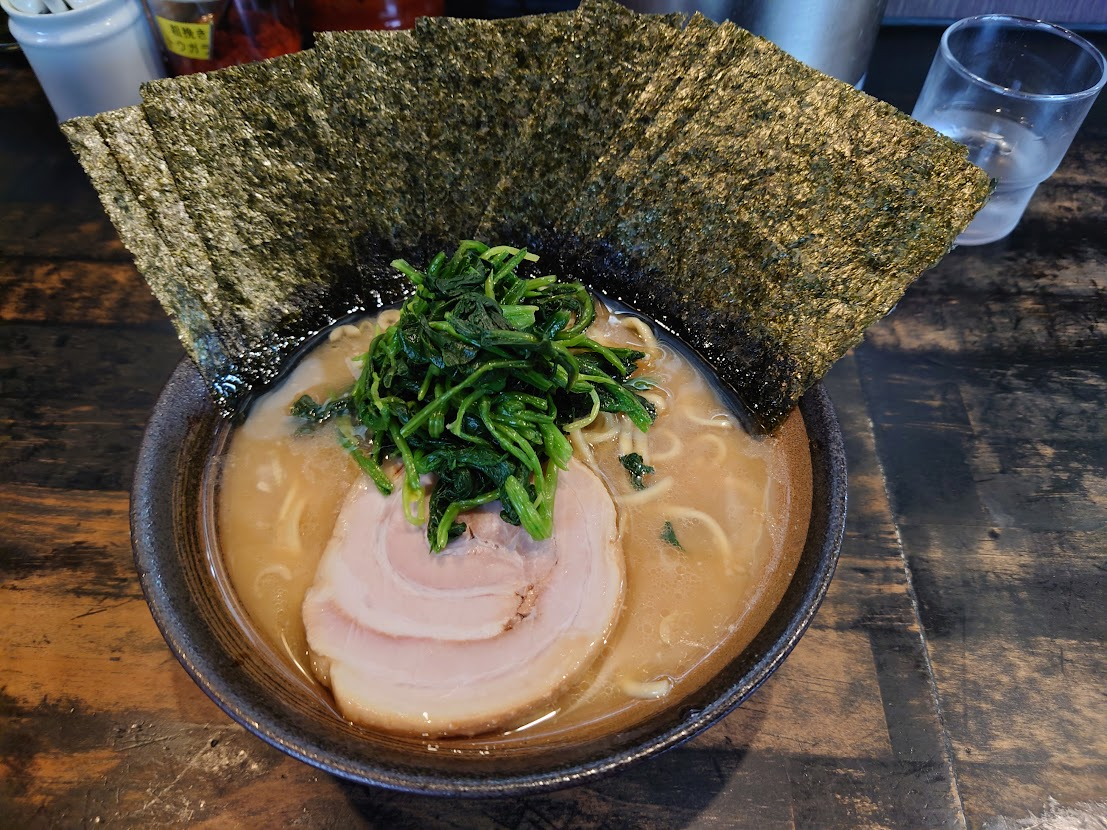
Walk into a ramen shop in Japan and one sound is almost impossible to miss: zuzuzu—the sound of noodles being pulled quickly into the mouth.
For many visitors, the first question is obvious: Is slurping noodles an Asian custom?
That question is understandable, but “Asian culture” is too broad a category to explain it. Asia contains many different noodle traditions and many different rules of table etiquette. What we can say confidently is narrower and more interesting: in Japan, slurping ramen, soba, and udon is socially accepted, and the habit has deep roots in Japanese noodle culture.
The Japan National Tourism Organization explicitly tells visitors that making slurping sounds while eating ramen, soba, or udon is not considered rude. Its guide to ramen goes further: ramen has roots in China, but by the time Chinese-style noodle soup spread in Japan, soba and udon were already established foods, so slurping a bowl of noodles was nothing new.
That leads to a better question.
Why did slurping become normal in Japan in the first place?
- Before ramen, there was Edo soba
- Is slurping actually about flavor?
- Then ramen arrived—and the slurp was already there
- And then we reach a difficult word: iki
- But was slurping historically considered “iki”?
- Do you have to slurp noodles in Japan?
- A few seconds of everyday life can contain centuries of history
- Sources
Before ramen, there was Edo soba
The strongest trail leads to soba in Edo, the city now known as Tokyo.
Buckwheat had been eaten in Japan long before the Edo period, but the familiar form of thin soba noodles became established during the Edo era. According to Japan’s Ministry of Agriculture, Forestry and Fisheries, soba developed from temple and household foods into a major urban dish, sold not only in restaurants but also from yatai, small street stalls.
This matters because Edo was a huge, busy city. Soba was inexpensive, filling, and fast. A customer could stop, eat, and move on without turning the meal into a formal occasion.
That setting is very different from a ceremonial meal governed by elaborate etiquette.
Food writer Motohashi Takashi, in a cultural history published by Nippon.com, argues that this street-food environment offers a plausible explanation for the custom. Eating noisily was not generally good manners in Japan, but soba stalls served ordinary townspeople in situations where speed and practicality mattered more than formal dining rules.
In other words, noodle slurping may have survived not because Japan traditionally celebrated noisy eating, but because noodles became a special exception.
Is slurping actually about flavor?
There is also a sensory explanation.
Horii Yoshinori of the long-established Tokyo soba restaurant Sarashina Horii has suggested that slurping helps diners experience the aroma of soba. The idea involves retronasal olfaction: aromas released in the mouth can travel upward toward the nose from the throat while we eat.
This sensory pathway is real. Research on smell and flavor distinguishes orthonasal olfaction—smelling through the nostrils—from retronasal olfaction, which contributes strongly to flavor perception during eating.
But an important distinction is needed here.
The science supports the importance of retronasal smell to flavor. It does not prove that people in Edo consciously invented noodle slurping for that reason. Horii’s explanation is a plausible account of why slurping can change the sensory experience of soba, not a documented historical origin story.
That uncertainty actually makes the custom more interesting. A practical way of eating can become culturally established long before anyone tries to explain it scientifically.
Then ramen arrived—and the slurp was already there
Ramen illustrates how food culture can cross borders and then change inside a new cultural setting.
Japanese ramen has roots in Chinese noodle dishes. JNTO notes that the precise route by which ramen entered Japan is debated, although Chinese-style noodle soup became increasingly visible in the late nineteenth and early twentieth centuries.
But Japan already had established soba and udon cultures.
So the noodles were new; the act of slurping noodles was not.
This is one reason it is misleading to say simply that “ramen is Chinese, therefore slurping ramen must be a Chinese custom,” or conversely that “all Asians slurp noodles.” Foods, techniques, manners, and meanings do not necessarily travel together as one package.
Ramen became Japanese partly by entering an existing Japanese world of noodle eating.
And then we reach a difficult word: iki
At this point, the story moves beyond etiquette.
There is a Japanese word that is notoriously difficult to translate: iki (粋).
“Cool,” “chic,” “stylish,” and “refined” each capture a fragment of it, but none is an exact equivalent. Philosopher Kuki Shūzō made this difficulty central to his 1930 work The Structure of Iki. The Stanford Encyclopedia of Philosophy notes that Kuki himself discussed French words such as chic and raffiné but argued that no European term fully reproduced the cultural meaning of iki.
Iki grew from a particular urban cultural world. It can suggest sophistication without ostentation, awareness without over-explanation, and a kind of controlled ease.
Its everyday counterpoint is often yabo (野暮): roughly, being uncool, unsophisticated, overly literal, or failing to read the atmosphere.
This makes soba unexpectedly useful for thinking about the pair.
Imagine two diners.
One simply picks up the soba, eats it briskly, enjoys it, pays, and leaves.
The other delivers a five-minute lecture on the “correct” angle of the chopsticks, the approved volume of the slurp, and how everyone else is eating it incorrectly.
The first behavior can feel closer to iki.
The second starts to feel rather yabo.
But was slurping historically considered “iki”?
This is where we should be careful.
There is no good evidence that people in Edo invented noodle slurping because they had decided it was iki. Nor did Kuki use noodle slurping as the defining example of his philosophical concept.
The connection is better understood as an interpretive lens, not a proven origin.
Soba culture developed in an urban world where quick, unfussy eating made practical sense. Later descriptions of Edo style often admire behavior that looks effortless rather than overperformed. The vocabulary of iki and yabo helps us describe why a casual, confident way of eating can feel culturally different from a rigid rulebook.
And that may be one reason explaining Japanese manners can be surprisingly difficult.
Sometimes the rule is not simply:
Make no sound while eating.
Nor is it:
Always make noise while eating noodles.
It is closer to:
Understand what kind of place you are in, and do not make the situation more complicated than it needs to be.
That is much harder to translate.
Do you have to slurp noodles in Japan?
No.
Visitors are not required to slurp. Even the soba specialists who defend the practice do not argue that everyone must eat the same way.
The useful rule is simple:
- Slurping ramen, soba, or udon in Japan is generally acceptable.
- Not slurping is also acceptable.
- The custom is specific to noodles and context; it does not mean noisy eating is universally admired in Japan.
- There is no need to perform an exaggerated “Japanese” slurp for the sake of authenticity.
The point is not to pass a test. It is to understand why the sound exists.
A few seconds of everyday life can contain centuries of history
A bowl of noodles seems ordinary.
But follow the sound of someone eating it and the story expands quickly: buckwheat, Edo street stalls, urban life, sensory science, Chinese-Japanese food exchange, table manners, and finally a word—iki—that refuses to fit neatly into English.
That is exactly why ordinary habits are worth examining.
Japan’s culture is not found only in temples, festivals, tea ceremony, or formal traditions. Sometimes it is hiding in something as small as the sound made while eating lunch.
The slurp is only a few seconds long. The history behind it is much longer.
Sources
- Japan National Tourism Organization — FAQ: dining manners in Japan
- Japan National Tourism Organization — A Guide to Ramen in Japan
- Ministry of Agriculture, Forestry and Fisheries — Soba, Tokyo regional cuisine
- Nippon.com — A Cultural History of Noodle Slurping
- Bojanowski & Hummel (2012) — Retronasal perception of odors, PubMed
- Stanford Encyclopedia of Philosophy — Japanese Aesthetics: Iki
Featured photograph: Ordinary Japan / author’s photograph.