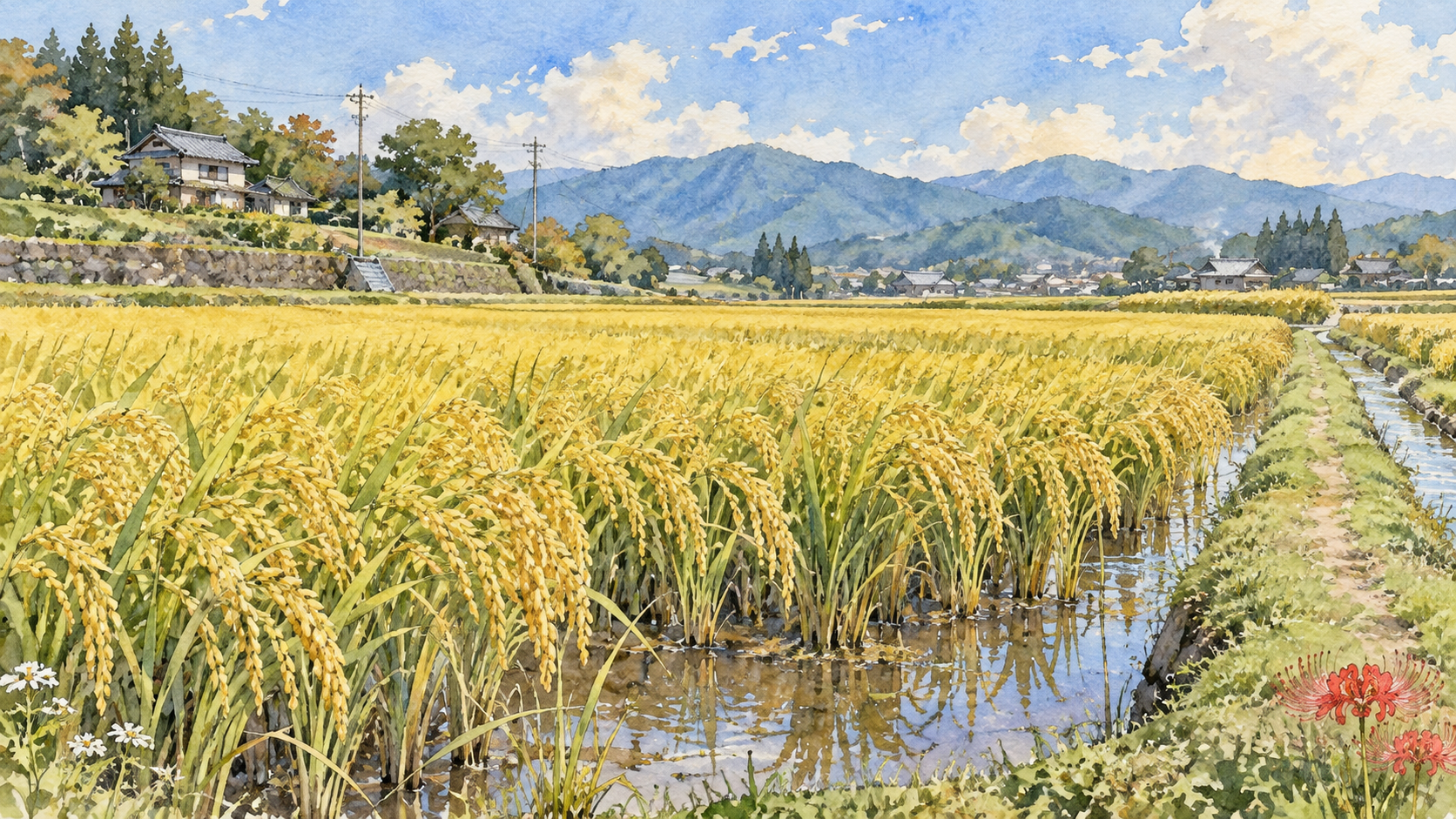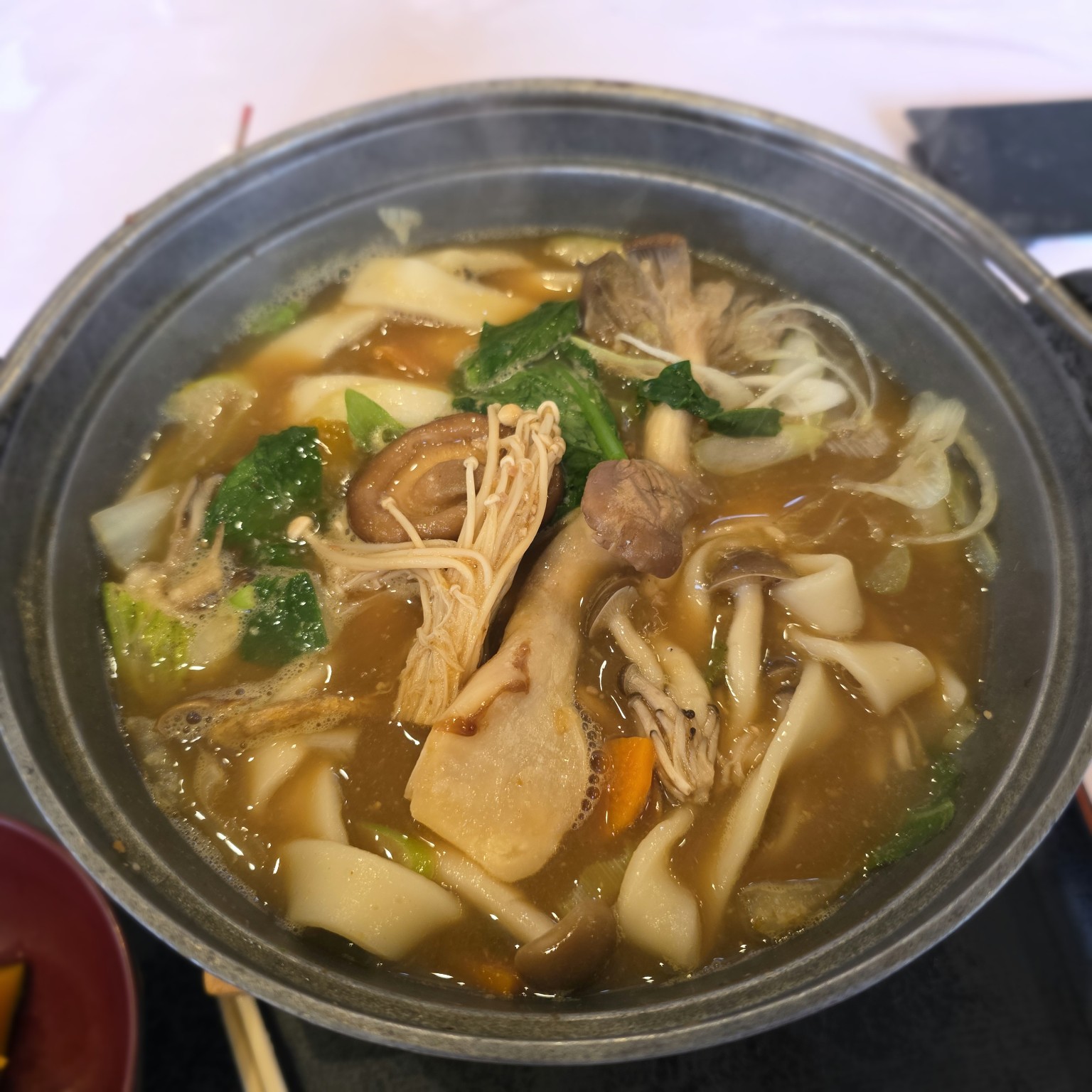
On October 3, 2026, I stopped by Lake Yamanaka in Yamanashi Prefecture and ordered a steaming pot of mushroom hōtō (ほうとう).
At first glance, it looks a little like udon: wide wheat noodles, vegetables, mushrooms and a hot broth. But once you look at how it is made, hōtō is clearly its own regional food tradition.
What is hōtō?
Hōtō is one of Yamanashi Prefecture’s best-known local dishes. Broad, flat wheat noodles are simmered together with vegetables in a miso-based broth.
Pumpkin is especially famous in hōtō, but the dish is not limited to pumpkin. Potatoes, taro, daikon, carrots, Chinese cabbage, green onions, mushrooms, tofu products and meat can all appear depending on the household, season or restaurant.
The mushroom hōtō I ate beside Lake Yamanaka was a good example of that flexibility: several kinds of mushrooms and vegetables shared the pot with the noodles, all absorbing the same rich broth.
It looks like udon, but the noodles work differently
The difference starts with the dough.
Traditional udon commonly uses salt in the dough to develop its characteristic texture. Traditional hōtō, by contrast, uses no salt or only a small amount. Japan’s Ministry of Agriculture, Forestry and Fisheries (MAFF) notes that the noodles can therefore go straight into the pot rather than first being boiled to remove salt.
The dough is rolled flat and cut into broad strips, usually wider than ordinary udon.
Then comes the most important difference: the noodles are put directly into the cooking pot, still carrying their dusting flour.
They are not normally boiled in a separate pot and rinsed first. As the noodles simmer, some of that flour enters the soup. The liquid becomes thicker, and the noodles, vegetables and broth gradually become one integrated dish.
That slightly thick, coating texture is one of the easiest ways to understand why hōtō does not simply feel like “wide udon.”
The broth is different too
Udon has many regional styles, so there is no single udon broth. Many familiar versions, however, combine separately cooked noodles with a relatively clear dashi-based soup seasoned with soy sauce and other ingredients.
Hōtō takes a different route.
A classic preparation uses dashi—often made with dried sardines—and seasons the pot with miso. Vegetables cook in the same broth as the raw noodles, and the flour left on the noodles thickens the liquid.
Pumpkin can make it even richer. As it softens, some of its flesh blends into the miso broth and adds sweetness and body.
The result is closer to a hearty noodle stew than a conventional bowl of noodle soup.
How is hōtō made?
A traditional home-style method is straightforward.
- Mix wheat flour with warm water and knead it into a firm dough.
- Let the dough rest.
- Roll it thin with flour and cut it into broad strips.
- Simmer firm vegetables such as daikon, carrots, potatoes and pumpkin in dashi.
- Add the raw hōtō noodles directly to the pot with their dusting flour.
- Add mushrooms, leafy vegetables, tofu products or meat as desired.
- Season with miso and continue simmering until the noodles are cooked and the broth has thickened.
Recipes vary from family to family, but the basic idea is consistent: the meal is built in a single pot rather than assembled from separately cooked noodles and soup.
Why Yamanashi?
Hōtō is closely tied to Yamanashi’s regional food culture.
Yamanashi is surrounded by mountains, and wheat-based foods became an important part of local cooking. MAFF describes a broader flour-based food culture in the prefecture that includes not only hōtō, but also dishes such as mimi, usuyaki, and the famously firm Yoshida udon.
Hōtō fits naturally into that tradition: flour becomes a filling staple, seasonal vegetables go into the same pot, and the whole meal can be prepared without a separate noodle-boiling step.
There is a popular story that the warlord Takeda Shingen used hōtō as a battlefield meal. Yamanashi Prefecture notes, however, that this is a tradition or theory rather than a firmly documented origin; written references become common from the Edo period onward.
Pumpkin is famous, but mushrooms belong here too
The expression “umai mon da yo, kabocha no hōtō”—roughly, “pumpkin hōtō is delicious”—is widely associated with Yamanashi.
But hōtō is fundamentally adaptable.
Official recipes and descriptions include mushrooms among the common ingredients, alongside pumpkin and other seasonal vegetables. That makes mushroom hōtō around the Fuji Five Lakes feel entirely at home within the dish’s basic logic.
The pot changes with what is available.
How do you eat it?
Hōtō is often served very hot.
At home, it is traditionally made in a large communal pot. Restaurants in Yamanashi often serve individual portions in iron pots, sometimes still bubbling when they arrive at the table.
There is no complicated etiquette. Use chopsticks for the noodles and solid ingredients, and a spoon or ladle for the broth if one is provided. Because the thick soup retains heat well, it is common to move a portion into a smaller bowl and let it cool slightly before eating.
That experience is also different from many bowls of udon. You are not simply eating noodles in soup; you are working your way through a hot pot of noodles, vegetables and thick miso broth together.
A local dish that makes more sense when you eat it there
Beside Lake Yamanaka, with the Fuji Five Lakes landscape outside, a pot of mushroom hōtō feels less like a tourist curiosity and more like an introduction to Yamanashi itself.
The broad noodles tell you about the prefecture’s wheat-based food culture. The vegetables reflect a flexible household dish. The miso broth and direct simmering method explain why its texture is so different from udon.
It may look familiar at first.
But hōtō is not simply another Japanese noodle shape. It is a one-pot regional cooking tradition with its own history, texture and way of bringing ingredients together.
Sources
- Ministry of Agriculture, Forestry and Fisheries (MAFF), “Hōtō”: https://www.maff.go.jp/j/keikaku/syokubunka/traditional-foods/menu/hoto.html
- MAFF, “Regional Food Culture of Yamanashi”: https://www.maff.go.jp/j/keikaku/syokubunka/kryouri/areastories/yamanasi.html
- Yamanashi Prefecture, “Hōtō (Noshi-ire / Noshi-komi)”: https://www.pref.yamanashi.jp/shokuhin-st/shokuiku/yamanashinoshoku/houtou.html
- Official Yamanashi Tourism Information, “Hōtō”: https://www.yamanashi-kankou.jp/special/gourmet_hoto.html