Japan’s traditional calendar gives this moment a name: 水始涸 (mizu hajimete karuru), usually rendered as “water begins to recede.”
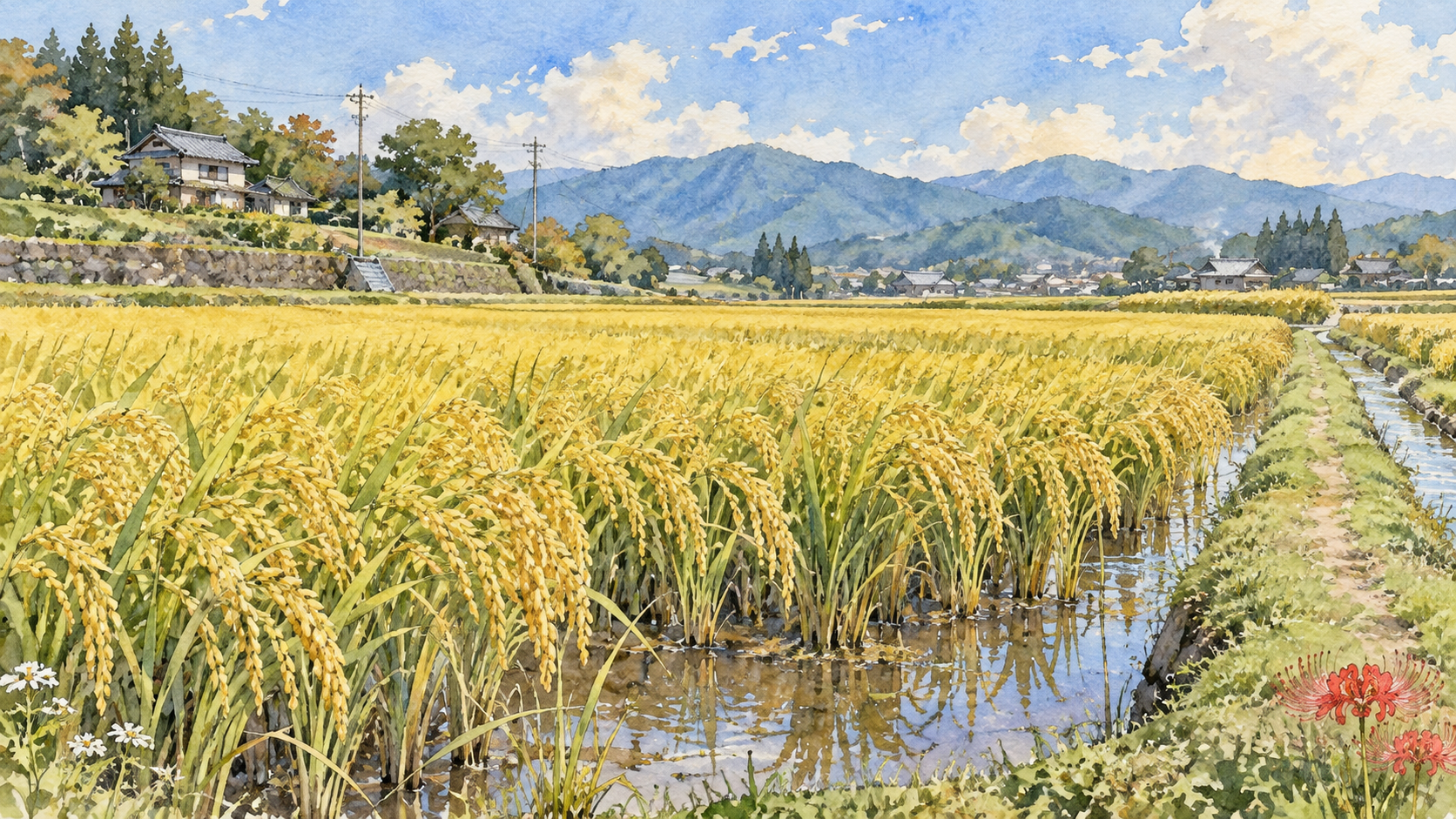
In the rice-growing year, the phrase is especially evocative. By early October, many paddies are moving toward harvest: the ears are heavy, fields are turning gold, and water management shifts as the crop finishes ripening. Modern rice farming does not follow one nationwide date, but the old microseason still points toward a real agricultural transition.
When is 水始涸 in 2026?
Ordinary Japan treats this microseason as October 3–7, 2026.
The date window is derived from the official 24-solar-term anchors published by the National Astronomical Observatory of Japan. NAOJ publishes the solar terms, not a modern official national schedule for all 72 microseasons, so this five-day interval should be read as a calendar framework rather than a government observation of nature.
Why this microseason is closely tied to rice
The literal image is water beginning to disappear. In the context of traditional Japanese agriculture, that naturally connects with rice paddies approaching harvest.
Modern guidance from Japan’s Ministry of Agriculture, Forestry and Fisheries shows that water management remains important right through the ripening period. MAFF specifically warns against draining paddies too early before harvest and says the timing of drainage should be decided according to ripening and weather conditions.
That detail matters. The old calendar does not mean that every rice field in Japan is suddenly drained on October 3. Variety, region, planting date, weather and field conditions all affect the actual schedule.
What the microseason captures is the transition itself: a flooded summer rice field becoming a harvest field.
Source: MAFF — technical guidance for rice cultivation
It is also the season of newly harvested rice
MAFF describes rice harvesting in Japan as generally taking place from August through October.
That makes early October an especially intuitive time to connect 水始涸 with new-crop rice. Depending on region and cultivar, some rice has already been harvested and is reaching shops and tables, while other paddies are still golden and waiting to be cut.
This is a useful example of shun (旬) as a moving season rather than a single date.
A bowl of new rice and a field of uncut rice can belong to the same moment.
Source: MAFF — rice and the harvest season
What is visible in Japan in October 2026?
The traditional calendar is only one seasonal clock. Food markets, retail and weather provide others.
Produce
MAFF’s October 2026 vegetable outlook for produce shipped to the Tokyo Central Wholesale Market expects the overall market to be close to normal, while individual crops differ. Chinese cabbage and lettuce are among vegetables expected to be relatively expensive, while potatoes and onions are expected to be relatively inexpensive.
This is not evidence for the paddy-water phenomenon itself. It is a snapshot of what the food system looks like during the same seasonal window.
Source: MAFF — October 2026 vegetable growth and price outlook
Everyday life
Seven-Eleven Japan’s current weekly lineup includes a Pacific-saury kabayaki onigiri using fish landed at Ofunato Port, released from September 29 in Tohoku.
A convenience-store rice ball is very different from a traditional microseason, but that is precisely why it is useful: it shows another way contemporary Japan signals autumn through ordinary food.
Source: Seven-Eleven Japan — this week’s products
Weather
The air can still feel much warmer than the old calendar wording suggests. JMA forecasts issued on October 5 included maximum temperatures of 29°C for Tokyo and 28°C for Osaka within the forecast period.
So this is not yet a uniformly cool autumn across Japan.
Source: JMA forecast — Tokyo
Source: JMA forecast — Osaka
Old calendar vs modern Japan
水始涸 works well today precisely because it does not have to be taken as a literal nationwide observation.
The traditional image says: rice is nearing harvest, water is leaving the paddy, and the agricultural year is turning toward cutting and new rice.
Modern evidence adds nuance:
- rice harvest timing differs by region and cultivar;
- draining too early can reduce grain quality and yield;
- some new rice is already on the market while other fields remain uncut;
- autumn foods are appearing in everyday retail;
- daytime temperatures can still approach 30°C.
The clocks overlap, but they are not perfectly synchronized.
How to notice 水始涸 today
If you are in a rice-growing area, look for paddies that have changed from bright summer green to gold. Some may still hold shallow water; others may look firmer and drier as harvest approaches. The important point is not to assume that every field should be at the same stage.
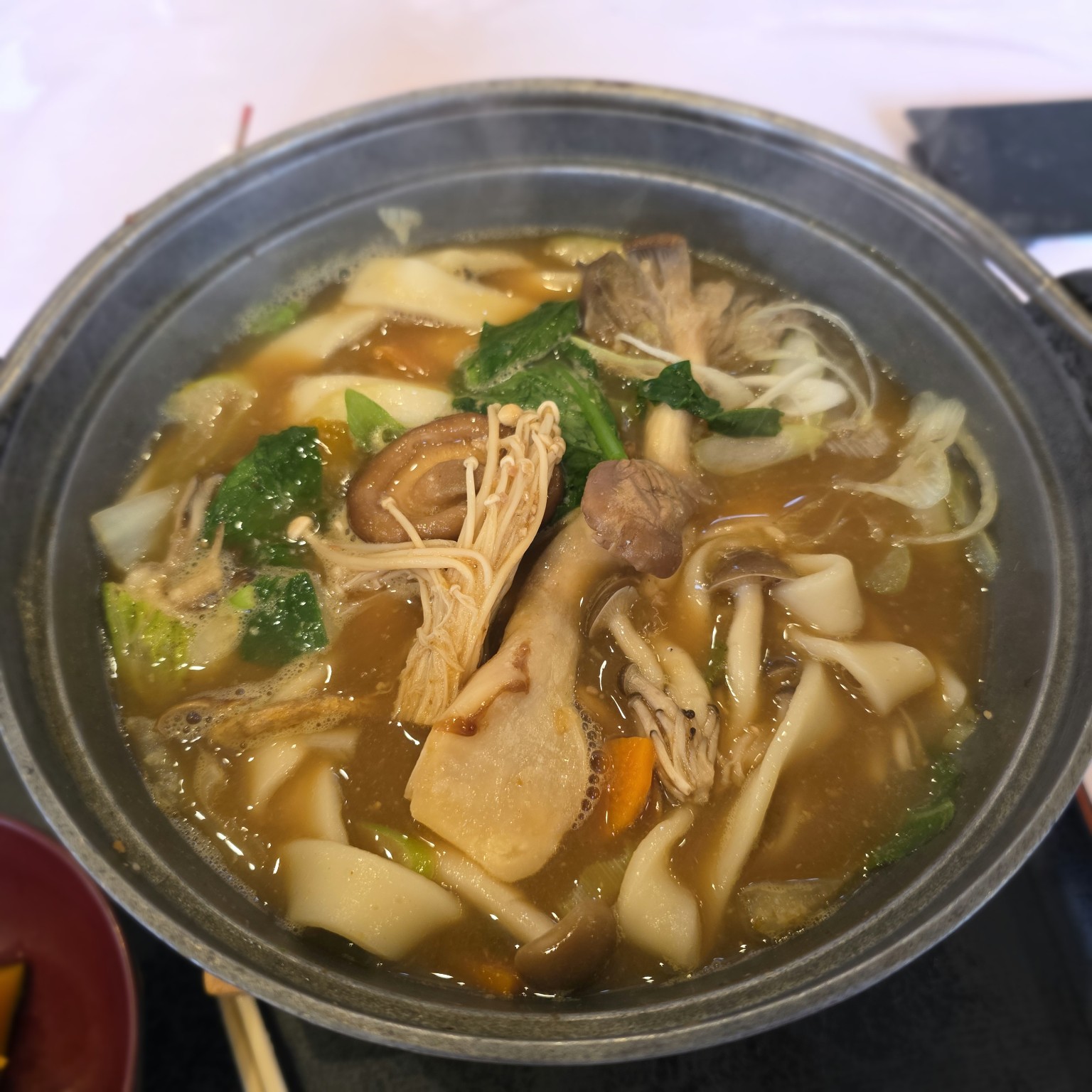
In shops, look for newly harvested rice and foods built around the early-autumn harvest. On the table, a simple bowl of fresh rice may be one of the clearest seasonal experiences available.
This is one reason the 72 microseasons remain useful. They are not strict biological timetables. They are prompts to compare inherited seasonal language with the Japan that is actually in front of us.
Where this fits in Japan’s seasonal calendar
水始涸 belongs to 秋分 (Shūbun, Autumn Equinox) and is followed by 鴻雁来 (Kōgan kitaru, Wild geese arrive).
See the full guide: Japan’s 24 Solar Terms and 72 Microseasons
Calendar source
The 24-solar-term anchors used by Ordinary Japan are based on the National Astronomical Observatory of Japan’s 2026 almanac: https://eco.mtk.nao.ac.jp/koyomi/yoko/2026/rekiyou262.html
The 72-microseason interval used here is derived from those official anchors and should not be interpreted as a separate official NAOJ publication of the 72 microseasons.