The first time a highway rest stop in Japan feels unusual is often not because of the restroom or the parking lot. It is because, after stepping out of the car, you realize that the stop has become part of the trip.
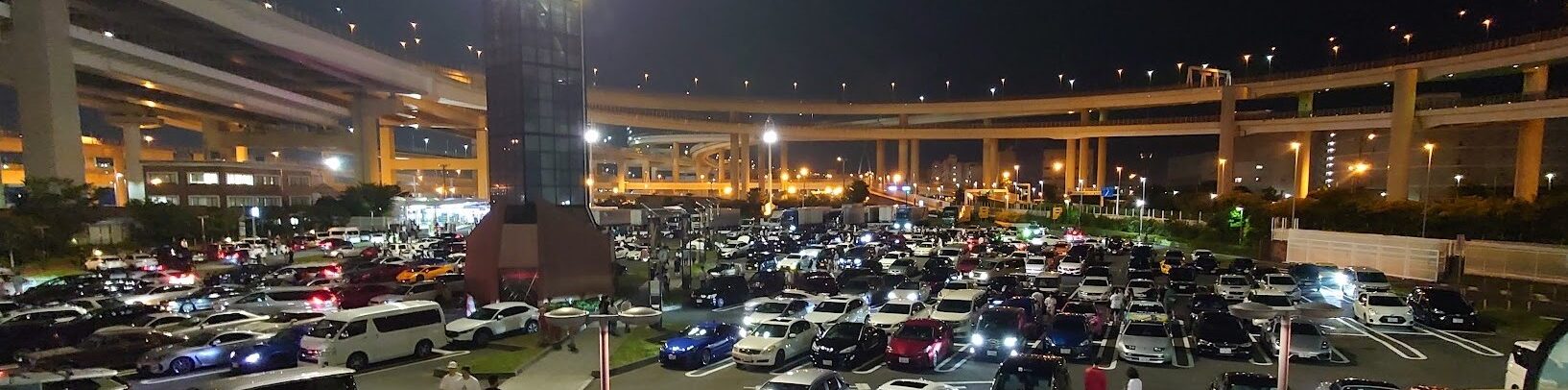
The photograph used for this article was taken at Daikoku Parking Area in Yokohama. Daikoku is officially a PA, not an SA, but in everyday English both are easiest to describe as highway rest stops. The labels matter less than the experience: you leave the flow of traffic and enter a small, temporary world built for drivers.
A stop that changes the rhythm of the drive
On a long drive, a rest stop should be practical. You park, use the restroom, buy a drink, and continue. Japanese service areas and parking areas do all of that, but many of them also create a clear change of pace.
The road noise becomes distant. People stretch, look at maps, choose snacks, and decide whether to eat now or wait until the next stop. Families move more slowly than they did in the car. Truck drivers take a proper break. Even a ten-minute visit can divide a journey into distinct chapters.
That feeling is important. The stop is not merely empty space between an origin and a destination. It gives the drive its own structure.
SA and PA: two familiar labels
Japanese expressways commonly use two abbreviations: SA for service area and PA for parking area. Service areas are generally expected to be larger, while parking areas are often simpler, but the actual facilities vary widely.
A PA can still have food, shops, vending machines, and enough character to become memorable. Daikoku is a good example. Its official name says “parking area,” yet it feels much more substantial than the small roadside pull-off that the English words might suggest.
For visitors, the practical lesson is simple: do not judge a stop only by whether it is marked SA or PA. Check what is actually there, and allow time for the unexpected.
Food turns a break into an experience
Food is one reason these places become destinations. A highway rest stop may offer a quick bowl of noodles, curry rice, a regional snack, soft-serve ice cream, or a souvenir that is strongly associated with the surrounding area.
None of this needs to be luxurious. The appeal is often the opposite. You are eating ordinary food in a place where you did not expect to care about food at all.
There is also a particular pleasure in choosing something while still thinking about the road ahead. A hot meal feels different when you have been driving for two hours. A canned coffee bought from a vending machine can become attached to a specific journey. The memory is not only about taste; it is about timing and place.
A small piece of local culture
Many Japanese rest stops try to reflect their region. The products, signs, seasonal displays, and food choices can give a brief introduction to a place before you properly arrive there.
This creates a strange but interesting form of local culture. The stop is part transport infrastructure, part shop, part dining space, and part tourist information point. It is designed for people who are moving through, yet it often tries to persuade them to pause and notice where they are.
That balance is very Japanese: efficiency without removing the possibility of small enjoyment.
Daikoku PA feels different
Daikoku Parking Area is surrounded by elevated roads, ramps, concrete, and the dense infrastructure of the Tokyo metropolitan area. It does not offer the quiet rural atmosphere associated with many roadside stops.
That is precisely why it is interesting.
The place makes the expressway itself visible. You are not escaping the road; you are standing inside its architecture. Cars arrive from different directions, stop briefly, and return to the network. The parking area feels like a room built inside a machine.
Seen in daylight, it can also feel surprisingly ordinary. People buy food, check their phones, rest, and continue. The famous name and dramatic road structure exist alongside very normal human behavior.
Why these stops feel like destinations
A good Japanese highway rest stop combines several things that are usually separated:
- the basic safety function of taking a break
- food and shopping
- local information
- clean, predictable facilities
- a sense of place
- the quiet excitement of being on the way somewhere
The result is not a tourist attraction in the usual sense. You may never plan an entire holiday around one. But you might choose your route, meal time, or departure time because of a particular stop.
That is enough to change its role. Once a rest stop influences the journey, it is no longer merely supporting the destination. It has become one of the destinations.
The ordinary Japan between destinations
Travel writing often focuses on famous places: temples, city centers, mountains, and restaurants. But much of Japan is experienced in the spaces between those places.
A service area at lunchtime, a parking area late at night, a vending machine under fluorescent light, or a family deciding which souvenir to buy can reveal as much about daily life as a major attraction.
Japanese highway rest stops are useful because they make travel safer and more comfortable. They are memorable because they also make the journey feel inhabited.
Sometimes the most ordinary stop is the part of the drive you remember best.
コメント