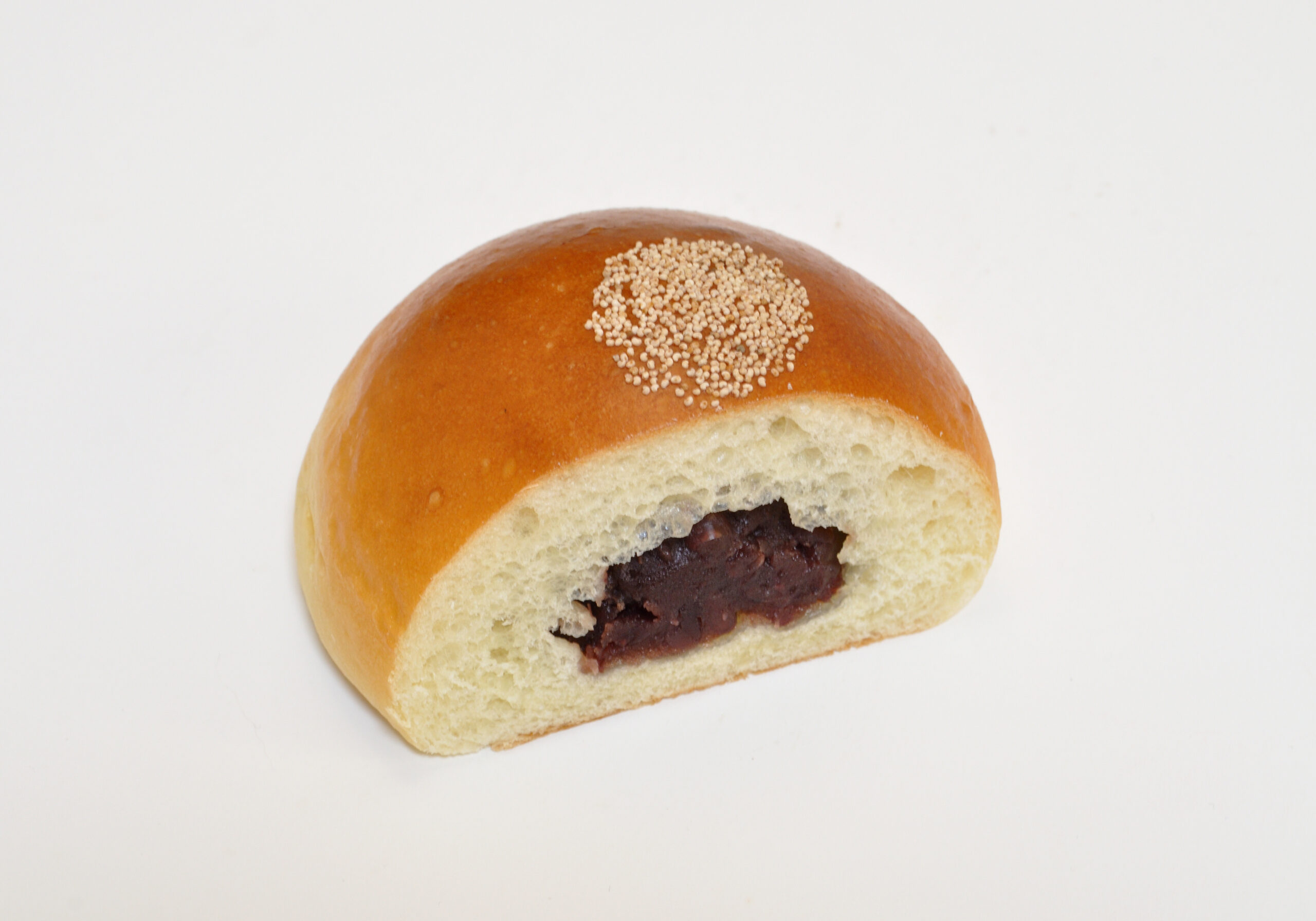
In Japan, children often meet Anpanman before they meet most other superheroes.
His round red cheeks appear on toys, books, clothes, tableware, food, bath products, learning devices, and almost every other category associated with early childhood. Parents do not need to seek him out. Once a child enters the world of Japanese nurseries, toy shops, supermarkets, television, and family life, Anpanman seems to be everywhere.
Outside Japan and parts of East Asia, however, many people have never heard of him.
That contrast makes Anpanman one of the strangest intellectual properties in modern entertainment. He has not conquered the world through international cinema, globally distributed games, or a multilingual streaming phenomenon. His commercial ecosystem was built overwhelmingly through Japanese infants and toddlers.
Yet estimates of his cumulative retail sales regularly place him among the largest media franchises ever created.
Anpanman is a global-scale IP without a truly global audience.
First, what is anpan?
The name is entirely literal.
Anpan is a soft Japanese bread roll filled with sweet red-bean paste. Anpanman’s head is one of these buns. When someone is hungry, he tears off part of his own face and gives it to them to eat.
For Japanese children, the idea connects a familiar food with a simple visual design: a round face, strong colors, and clearly readable expressions. For someone encountering the character for the first time as an adult, the premise can sound surprisingly grotesque.
A smiling superhero allows strangers to eat his face.
But that unsettling detail is not an accidental joke. It is the center of the character’s moral philosophy.
A hero who becomes weaker when he helps
Most superheroes demonstrate justice by defeating an enemy. Their power is shown through strength, speed, weapons, invulnerability, or some extraordinary transformation.
Anpanman’s defining act works in the opposite direction.
He gives away part of himself. His damaged face leaves him physically weaker, and he cannot simply restore it alone. A fresh head must be baked at the bakery and delivered to him by his companions.
Helping another person therefore has a cost. The hero is not self-sufficient, and the story does not pretend that sacrifice leaves him untouched.
This idea came from the experiences of Anpanman’s creator, Takashi Yanase. Yanase lived through war, hunger, and the sudden reversal of the values that had been described as “justice” before Japan’s defeat. He came to believe that political justice could change according to position and circumstance, while feeding a hungry person remained a form of justice that did not reverse.
Anpanman does fight Baikinman, whose name comes from the Japanese word for bacteria or germs. But destroying the villain is not his deepest purpose. The most fundamental heroic action is making sure someone has something to eat.
That is unusually concrete morality for a children’s character. Justice is not a speech, an identity, or a victory. It is bread handed to a hungry person.
A giant built through depth rather than distance
The television anime has been broadcast in Japan since 1988. The original picture-book world began earlier, and publisher Froebel-kan reported that its Anpanman books had passed 90 million copies in cumulative circulation by 2025. The animated series also received a Guinness World Record after 1,768 distinct characters had appeared by June 2009. Guinness still lists the achievement.
Those are large numbers, but they do not fully explain the franchise’s economic scale.
A 2025 Japanese business analysis estimated the Anpanman economic sphere at roughly ¥150 billion in annual retail sales, with that scale sustained across much of the period from 2006 to 2023. This is not the revenue of one company. It is the estimated retail value of the wider licensed ecosystem: toys, clothing, food, books, household goods, facilities, and many other products.
Online rankings sometimes describe Anpanman as approximately the sixth-highest-grossing media franchise in history. That exact position should be treated cautiously. Franchise rankings combine estimates from different periods and revenue categories, and they are not equivalent to a single audited global account.
The safer conclusion is still remarkable: a franchise centered mainly on Japanese preschool children has generated retail value on the scale of the world’s best-known entertainment properties.
Pokémon became enormous by spreading across countries, languages, games, cards, television, film, and multiple generations of fans.
Anpanman became enormous by going extremely deep into one stage of life in one main market.
His audience disappears every few years
Anpanman’s core audience is unusually young.
Bandai surveys have repeatedly found especially strong support among children aged zero to two. But children do not remain toddlers. They soon move on to heroes, princesses, games, idols, sports, and more complicated stories.
From a normal entertainment-business perspective, that should be a serious weakness. The franchise continually loses its most enthusiastic customers as they grow older.
In practice, the audience is replaced by the next birth cohort.
Every year, a new group of children begins recognizing faces, learning words, eating from small plates, choosing toys, watching short stories, and forming emotional attachments. Anpanman does not need the same child to remain a dedicated fan for twenty years. He needs to become relevant to each new generation at roughly the same early stage.
The parents have also often grown up with him. The person purchasing the toy may have forgotten the plots, but not the feeling that Anpanman is familiar, safe, and suitable for a very young child.
This produces a rare kind of intergenerational continuity. The child is a new customer. The parent supplies inherited trust.
Why the character fits early childhood so well
Anpanman’s world is easy to enter before a child can follow a long narrative.
The main faces are visually distinct. Character names often explain exactly what they are. Shokupanman is based on sliced white bread. Currypanman is based on curry bread. Melonpanna is based on melon bread. Baikinman represents germs. Many other residents are foods, utensils, animals, plants, or ordinary objects transformed into people.
A child does not need to memorize an elaborate mythology before understanding the basic pattern.
The stories also repeat without requiring a final conclusion. Baikinman causes trouble. Someone needs help. Anpanman intervenes. The immediate problem is resolved, but the villain remains part of the world and returns another day.
For adults accustomed to stories that escalate toward a final battle, this can look narratively static. For small children, repetition is useful. The familiar structure allows them to anticipate what will happen, recognize emotions, and concentrate on small variations.
The enormous cast strengthens that system. Almost anything in daily life can enter the Anpanman world as a new character, while the central moral pattern remains unchanged.
Why did such a large franchise remain so domestic?
Anpanman is not literally confined to Japan. The series has had recognition in parts of Asia, particularly Taiwan, where it is known as Mianbao Chaoren, or “Bread Superman.” In 2015, Taipei became the location of the first official Anpanman shop outside Japan.
But this is still a modest international footprint compared with Pokémon, Hello Kitty, Mario, Dragon Ball, or major Disney properties.
Several barriers are built into the concept.
First, anpan itself is culturally specific. Bread is universal, but sweet azuki-bean paste inside bread is not equally familiar everywhere. A Japanese child can understand the name immediately. In another language, the hero may require a culinary explanation before the story even begins.
Second, much of the character system depends on Japanese food vocabulary and wordplay. Translating the names is possible, but translation can weaken the direct connection between sound, object, and personality.
Third, the act of eating part of a hero’s face can be interpreted very differently when separated from Yanase’s idea of feeding the hungry. Without that context, it risks appearing bizarre rather than compassionate.
Most importantly, preschool media does not travel in the same way as entertainment for teenagers and adults. Young children usually encounter characters through local television schedules, dubbed voices, toy shelves, nursery culture, parental trust, and domestic retail distribution. They do not independently discover a foreign franchise through online fandom and then import the merchandise themselves.
Anpanman’s Japanese strength is therefore difficult to reproduce abroad. It is not just a successful television show. It is an entire local childhood infrastructure.
A world-class IP that most of the world does not know
Anpanman challenges the usual picture of a successful media franchise.
We tend to measure cultural power by geographic reach. A character seems important when people recognize it in New York, Paris, Bangkok, São Paulo, and Tokyo.
Anpanman demonstrates another route to scale.
A franchise can become enormous through density rather than breadth. It can occupy one country, one age group, and one set of everyday purchasing decisions so thoroughly that its economic footprint rivals globally famous properties.
The result is a paradox.
Anpanman is intensely local. His name depends on a Japanese bun. His cast is full of Japanese food language. His main audience is concentrated among very young children. His overseas expansion has been limited compared with other major Japanese characters.
At the same time, he is not a minor domestic mascot. His books have circulated in the tens of millions. His television series has continued for decades. His licensed products form a vast consumer ecosystem. His cast was large enough to earn a Guinness World Record.
And beneath all of that commercial scale is an unusually modest definition of heroism.
The strongest person is not the one who remains unharmed.
It is the one willing to give part of himself to someone who is hungry, become weaker, and rely on others to help him recover.
That may be the most distinctive thing about Anpanman—and the reason Japan keeps introducing him to each new generation.
Featured image: “Anpan 002” by Ocdp, via Wikimedia Commons. The image was dedicated to the public domain under CC0. No official Anpanman character artwork is reproduced in this article.
コメント