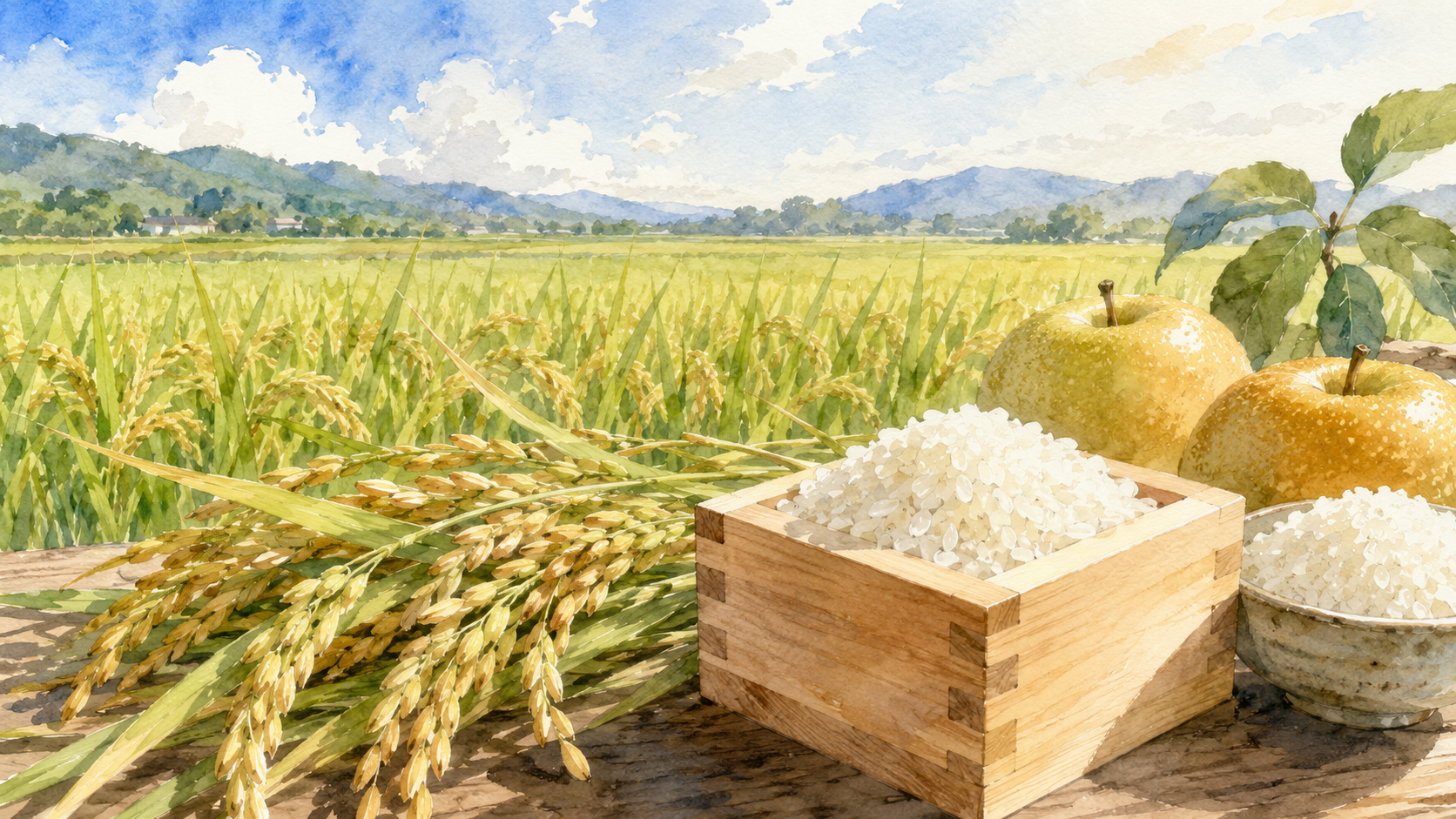
Japan’s traditional calendar gives this moment a name. Ordinary Japan uses that old seasonal language as a framework, then checks it against what can actually be observed in present-day Japan.
Calendar meaning
For 2026, Ordinary Japan treats 禾乃登 (Rice and other grains ripen) as 2026-09-02 to 2026-09-06. This window is derived by dividing the interval between adjacent official solar-term dates; it is not presented as a NAOJ-published 72-microseason date.
The calendar phrase is historical seasonal language, not proof that the named natural event is happening everywhere in Japan today.
Current evidence: 2026
For 禾乃登 (Rice and other grains ripen), this section records what current public or institutional sources document during the seasonal window. It does not claim a firsthand Ordinary Japan observation or owner photo.
Nature
- 2026-08-26 · Tokyo · JMA’s forecast issued 2026-08-26 for Tokyo includes a maximum temperature of 35°C within the forecast period. Source: Japan Meteorological Agency forecast — Tokyo.
- 2026-08-26 · Osaka · JMA’s forecast issued 2026-08-26 for Osaka includes a maximum temperature of 35°C within the forecast period. Source: Japan Meteorological Agency forecast — Osaka.
Everyday life
- 2026-08-26 · Japan / listed sales regions · The traditional label 禾乃登 (Rice and other grains ripen) and today’s retail cue are different kinds of seasonal signal. Seven-Eleven Japan’s official weekly lineup lists a maitake-rice onigiri. This contrast in everyday seasonal language does not establish whether the named natural phenomenon is occurring. Source: Seven-Eleven Japan weekly product lineup.
Old calendar vs modern Japan
- Differs: The traditional label 禾乃登 (Rice and other grains ripen) and today’s retail cue are different kinds of seasonal signal. Seven-Eleven Japan’s official weekly lineup lists a maitake-rice onigiri. This contrast in everyday seasonal language does not establish whether the named natural phenomenon is occurring. (Japan / listed sales regions, 2026-08-26; Seven-Eleven Japan weekly product lineup).
These observations are specific to their stated dates and regions. They should not be generalized to all of Japan without additional evidence.
No firsthand Ordinary Japan observation or owner photo is claimed in this note; the current-season statements above are source-backed reporting.
What “shun” means here
Shun is more than a date on a calendar. It is the sense that something is arriving (hashiri), at its seasonal best (sakari), or leaving (nagori). Ordinary Japan applies those labels only where a dated observation or cited source supports them.
Where this fits in the Japanese Seasonal Calendar
Calendar source
The twenty-four solar-term anchor is based on the National Astronomical Observatory of Japan almanac: https://eco.mtk.nao.ac.jp/koyomi/yoko/2026/rekiyou262.html