I bought a new umbrella.
That may sound like a small thing, but in Japan’s rainy season, an umbrella can feel less like an accessory and more like daily equipment.
The rainy season in Japan is called tsuyu. It usually comes before the full heat of summer. The sky becomes gray, the air becomes heavy, laundry refuses to dry, and everything begins to feel slightly damp. Shoes, walls, paper, closets, and even the air itself seem to absorb moisture.
It is not always dramatic rain.
When people imagine a rainy season, they may think of tropical rain: sudden heavy showers, strong storms, and rain that falls intensely for a short time. Japan’s tsuyu can have heavy rain too, and in some years it can be dangerous. But much of the everyday feeling of tsuyu is different.
It is often slower.
Light rain.
Cloudy skies.
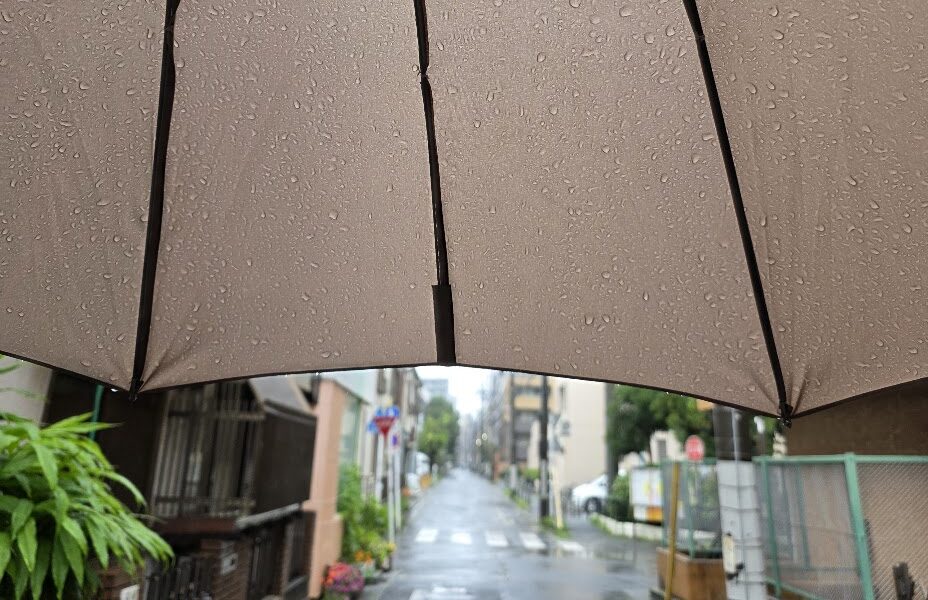
Wet streets.
Humid rooms.
A quiet feeling that the whole country has been wrapped in moisture.
The reason is partly geographical. Japan sits between different air masses, and in early summer a seasonal rain front often stays near the Japanese archipelago. Warm, moist air from the south meets cooler air from the north, and the result is a long, cloudy, rainy period.
So tsuyu is not simply “rain.” It is a season of moisture.
That moisture is inconvenient. It brings mold. It makes houses feel damp. It makes clothes dry slowly. It turns a short walk outside into a question: should I bring an umbrella, even if it is not raining right now?
In Japan, the answer is often yes.
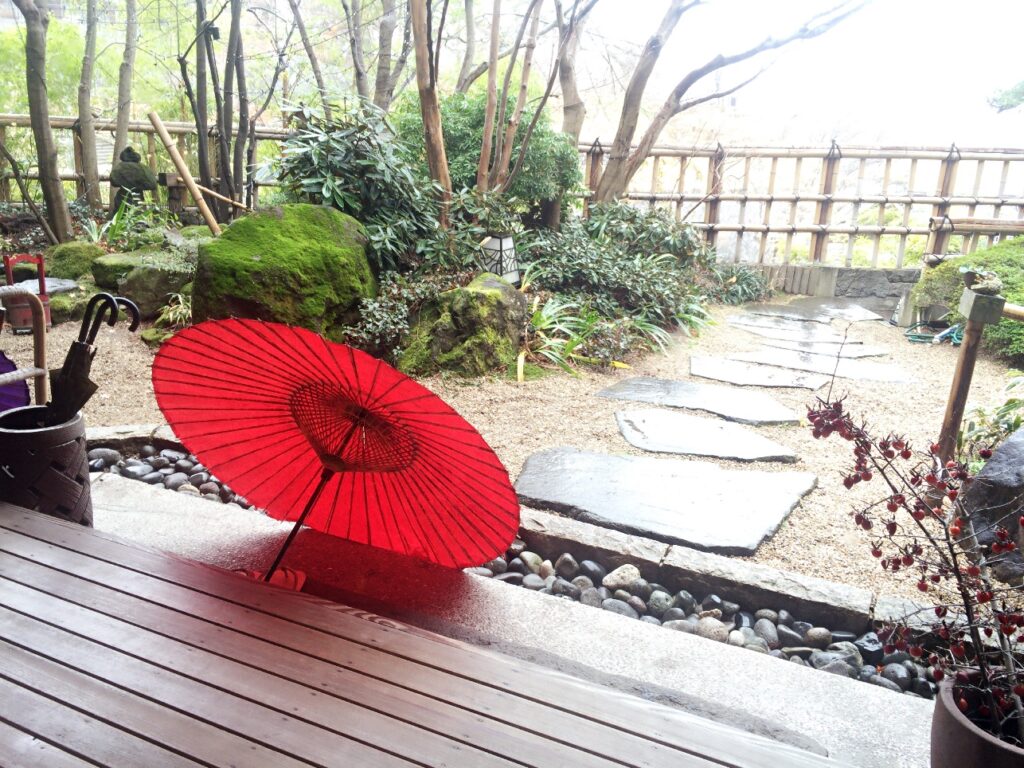
Umbrellas are a very visible part of rainy-season life. People carry folding umbrellas in bags. Convenience stores sell clear plastic umbrellas near the entrance. Office workers, students, parents, and elderly people all move through the streets under small personal roofs.
In some countries, people do not always use umbrellas in the same way. They may prefer rain jackets, hoods, cars, or simply walking through the rain. But in Japan, especially in cities and residential neighborhoods, the umbrella is deeply ordinary.
It changes the way streets look.
A narrow road becomes filled with moving circles.
A train station entrance becomes a forest of wet umbrellas.
A convenience store umbrella stand becomes part of the weather.
A rainy sidewalk becomes a place where people quietly adjust their distance from each other.
Still, I do not think tsuyu is only unpleasant.
Rain also softens Japan.
Plants become greener. Dust is washed from the air. The sound of tires on wet roads becomes part of the background. The smell of soil, leaves, concrete, and rain begins to rise from the street. On a quiet day, if the rain is not too strong, opening a window and feeling a small breeze under the eaves can be surprisingly pleasant.
There is something good about a gentle rain that continues without hurry.
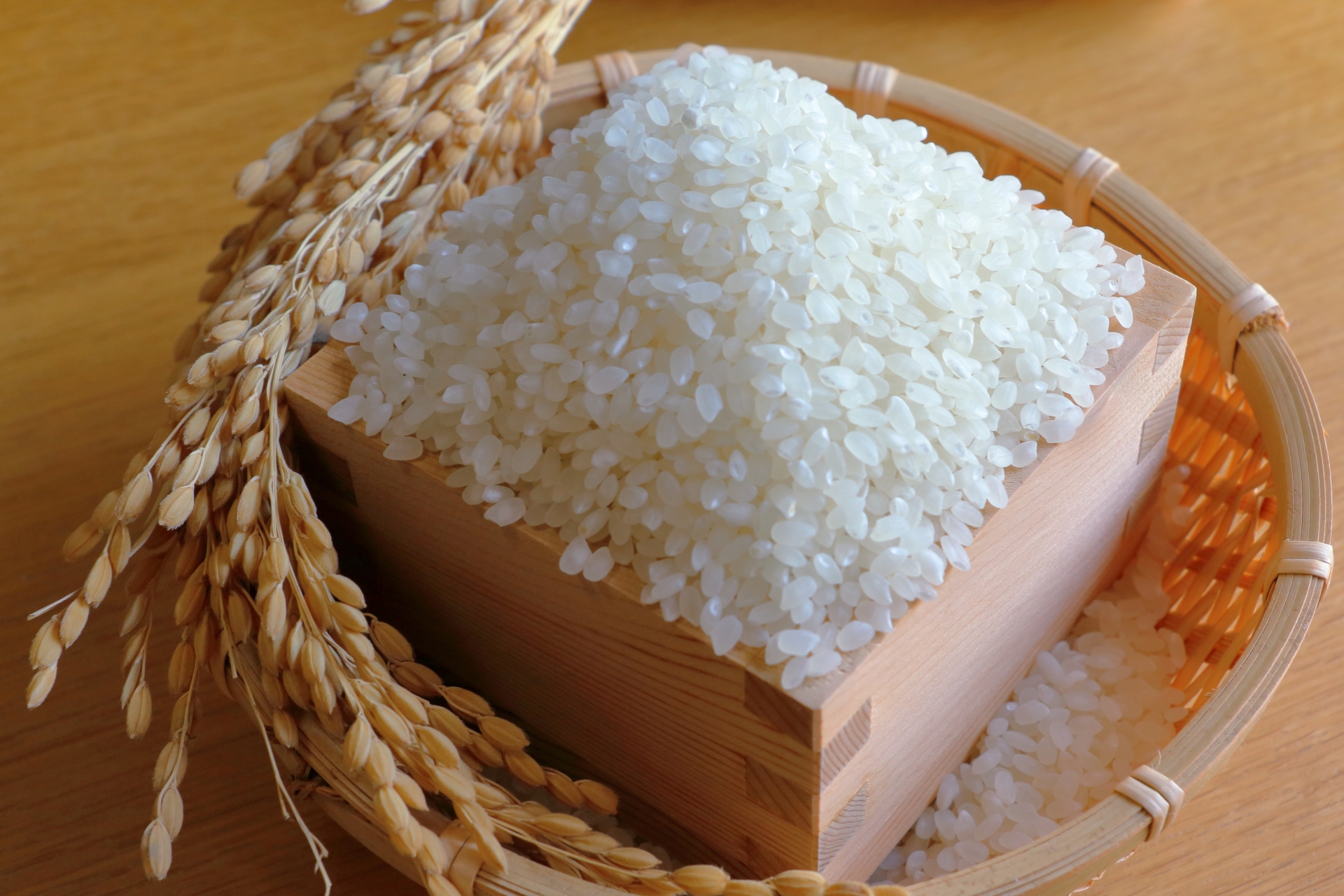
Tsuyu also has another role. Before the hottest part of summer, Japan needs water. Rice fields are filled. Reservoirs and rivers receive rain. The landscape prepares itself for summer. For a country where rice has been central for so long, early-summer rain is not just weather. It is part of the rhythm of food, fields, and daily life.
Of course, too much rain can be dangerous. Heavy rain, floods, and landslides are real risks in Japan. The rainy season is not something to romanticize without caution.
But ordinary rain is different.
The kind of rain that taps softly on an umbrella.
The kind of rain that makes a neighborhood quiet.
The kind of rain that turns plants darker green.
The kind of rain that makes you stay near a window and listen for a while.
That kind of rainy season is not bad.
It is humid.
It is inconvenient.
It can be tiring.
But it also gives Japan a certain softness before summer arrives.
So I bought a new umbrella.
Not because I love being wet.
Not because tsuyu is easy.
But because walking through Japan’s rainy season becomes a little better when you have an umbrella you actually like.