When people outside Japan hear the word “sushi,” they often imagine raw fish. Tuna, salmon, shrimp, sea urchin, salmon roe, and a chef preparing each piece at a sushi counter.
That image is not wrong. It is an important part of sushi culture. But in Japan, sushi is wider than that. Some kinds of sushi do not use raw fish at all.
One of the most familiar examples is inari sushi.
Inari sushi is made with vinegared rice wrapped in sweet fried tofu. The tofu pouch is called aburaage. It is simmered in a sweet and savory sauce, usually made with soy sauce, sugar, and mirin, then filled with sushi rice.
The outside is soft, sweet, and slightly juicy. The inside is simple vinegared rice. Sometimes the rice is plain. Sometimes it contains sesame seeds, carrots, shiitake mushrooms, lotus root, hijiki seaweed, or other small ingredients.
It is not flashy. It is not expensive. It does not have the dramatic look of raw fish on top of rice.
But it is still sushi.
This is one of the interesting things about sushi in Japan. Sushi is not defined only by seafood. At its core, sushi is about vinegared rice. Inari sushi makes that easy to understand.
You may not see inari sushi treated as the star at a high-end sushi restaurant. It does not usually have the same status as tuna, sea urchin, or carefully prepared nigiri. But in everyday Japan, it is very common.
You can find it in supermarkets, bento shops, convenience stores, department store food halls, train stations, and airports. It appears in lunch boxes, prepared-food sections, small travel meals, and family-style meals. It is the kind of food people buy without thinking too much about it.
That ordinariness is part of its charm.
Inari sushi is easy to eat. It travels well. It does not spill easily. It can be eaten with chopsticks or by hand. It works as a light meal, a side dish, or part of a bento. It is also friendly to people who do not want raw fish.
There are regional differences too. In eastern Japan, inari sushi is often shaped like a small rectangular pouch. In western Japan, especially around Kansai, triangular inari sushi is also common. These are not strict rules, but they show how even a simple everyday food can change from region to region.
There are also more decorative versions. Some inari sushi is left open at the top so that the colorful rice and toppings can be seen. These versions may include vegetables, beans, pickles, seafood, or seasonal ingredients. They look more festive, but they are still based on the same simple idea: rice inside sweet fried tofu.
The photos here show two different sides of inari sushi.
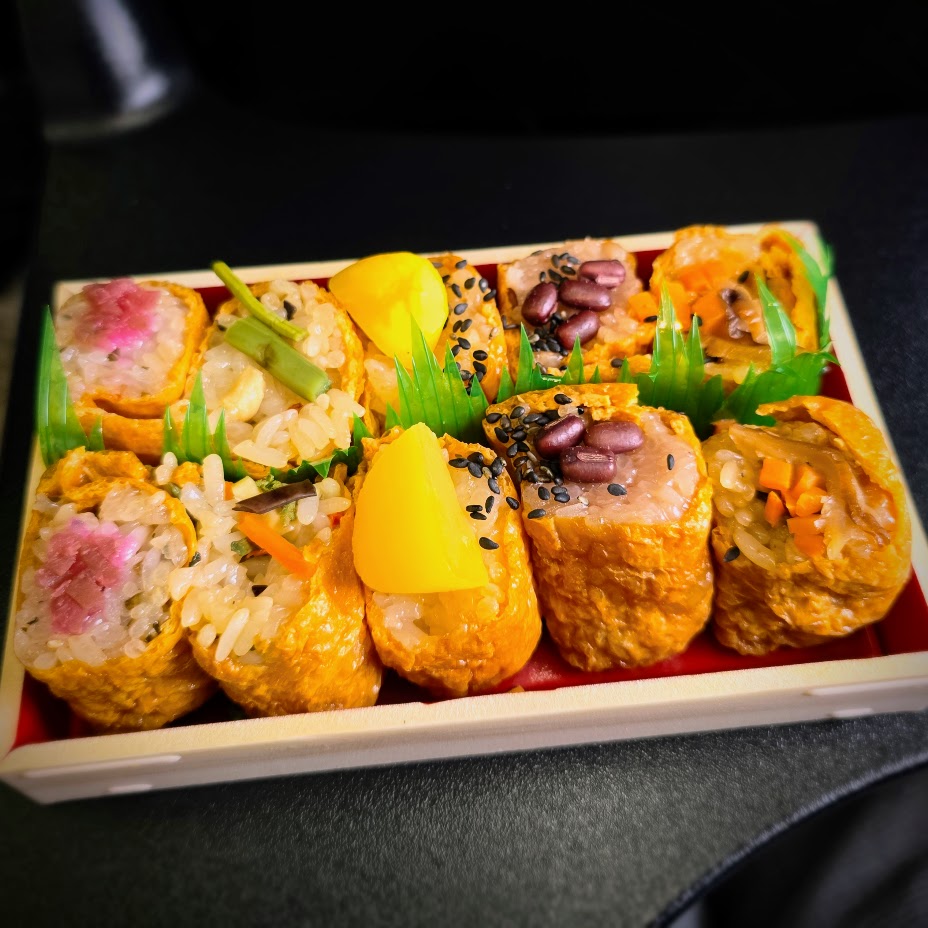
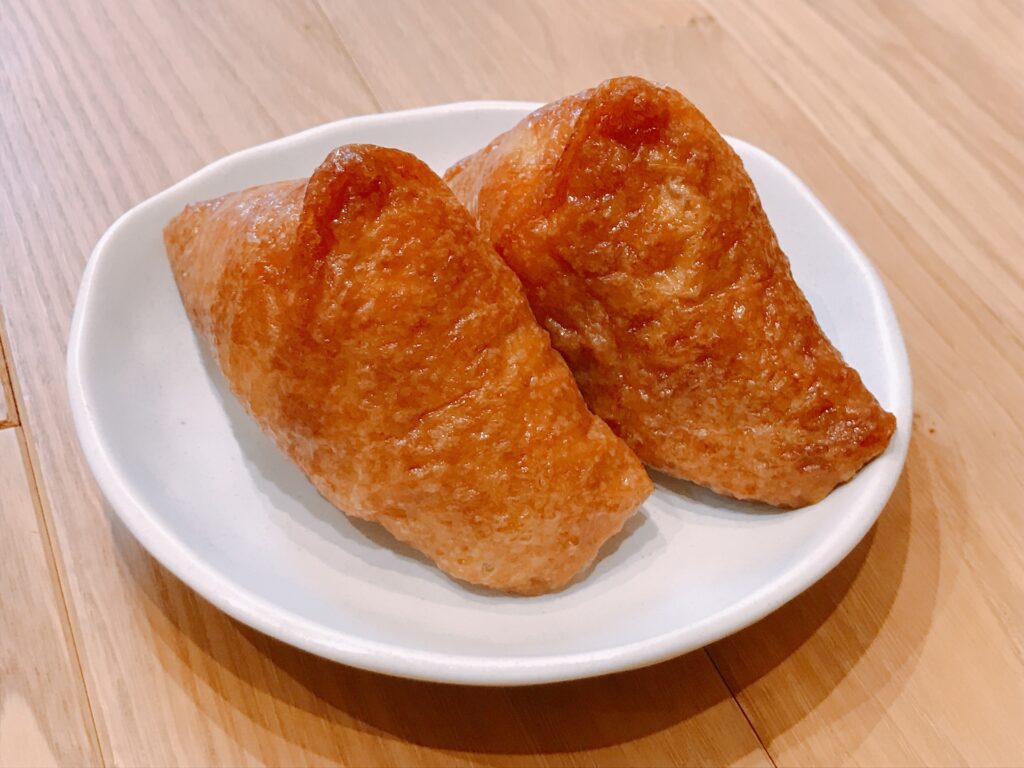
One is a simple plate of inari sushi. It is plain, familiar, and close to what many people might eat at home or buy from a supermarket. The other is an inari sushi bento I bought at the airport and ate on a plane.
That airport bento shows why inari sushi fits so well into Japanese travel food culture. It is small, neat, colorful, and easy to eat in a limited space. It is not airplane food. It is food bought before boarding and carried onto the plane.
For me, that feels very Japanese in an ordinary way.
Japan is famous for sushi, but not all sushi is a luxury experience. Some sushi is practical. Some is cheap. Some is sweet. Some has no raw fish at all.
Inari sushi is one of those everyday foods that quietly supports Japanese food culture. It may not be the first image people overseas have of sushi, but it is deeply familiar in daily life.
Simple, sweet, portable, and ordinary.
That is inari sushi.

コメント