
When people think of Japanese tea, they often imagine green tea.
That image is not wrong. Green tea has been part of Japanese life for a long time, and bottled green tea is still one of the most common drinks in convenience stores, supermarkets, vending machines, train stations, and lunch boxes.
But everyday tea culture in Japan is not only green tea anymore.
Recently, I came across an interesting story on social media. Someone said that when green tea was served with boxed lunches for students on a school trip, many bottles were left unfinished. The next time, they changed the drink to mugicha, or barley tea, and far more students drank it.
I do not know if this story represents all students in Japan. But it felt believable.
For many younger people, green tea may not always be the easiest drink. It has bitterness. It contains caffeine. It feels a little more “adult” or traditional. Some people like that, but others may simply prefer something milder.
Mugicha is different.
Mugicha is barley tea. It is usually caffeine-free, mild, and easy to drink. In Japan, it is strongly connected with summer, home refrigerators, school bottles, and family meals. Many children grow up drinking it cold.
It is not luxurious.
It is not fashionable in the same way as matcha.
It is not the kind of Japanese tea that is usually introduced beautifully overseas.
But it is extremely ordinary.
And that ordinariness matters.
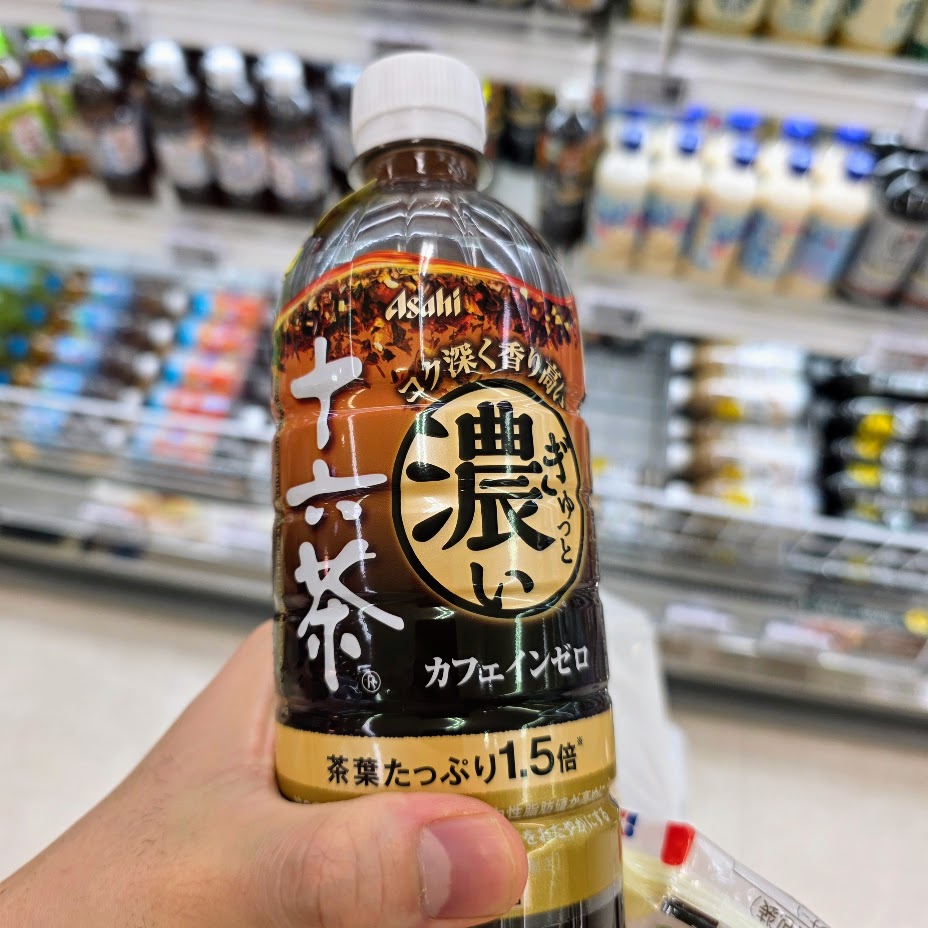
In Japan today, you can find many bottled teas that are not green tea: barley tea, roasted tea, blended tea, corn tea, oolong tea, jasmine tea, and caffeine-free teas. Some are light and easy to drink. Others are sold as “rich” or “strong” versions, with deeper roasted flavors or more tea leaves.
This bottle, for example, is a caffeine-free blended tea sold as a richer version. It is not presented as a ceremonial drink or a traditional cultural experience. It is simply a drink someone might buy at a convenience store, supermarket, or vending machine.
That is what makes it interesting.
Japanese tea culture is often shown through matcha, tea ceremony, and beautiful cups. But everyday tea culture is also changing quietly through plastic bottles, school trips, lunch boxes, and convenience-store shelves.
If young people leave green tea unfinished but drink barley tea instead, that says something small but real.
It does not mean green tea is disappearing.
It means everyday choices are becoming more diverse.
Japan is still a tea-drinking country.
But the tea in people’s hands is not always green.
コメント