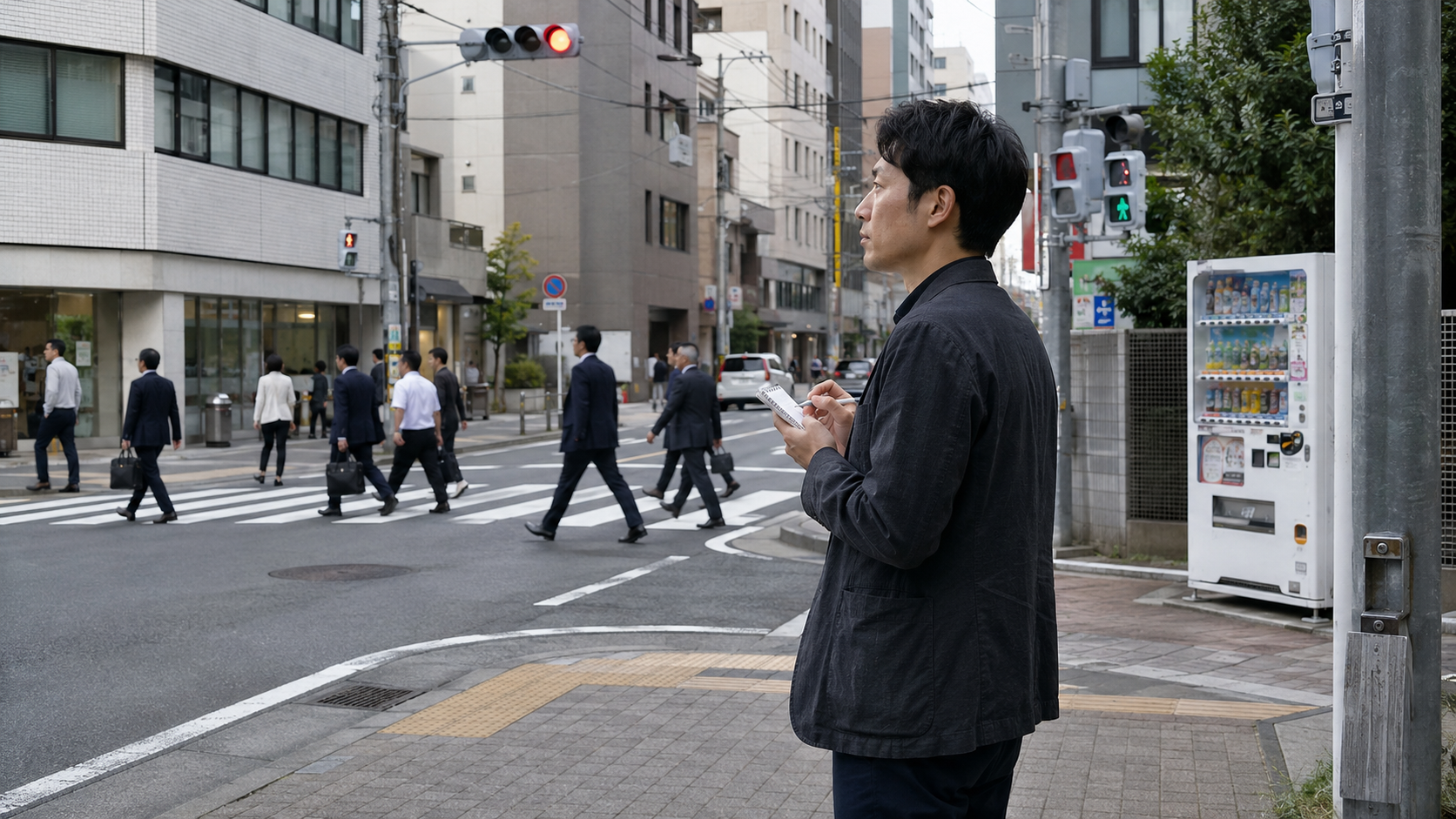
Japan is often described through words such as precision, cleanliness, politeness, and reliability. Trains usually arrive on time. Convenience stores are well organized. Restaurant service is consistent. Even an inexpensive lunch box from a supermarket can look carefully arranged. These are real strengths of daily life in Japan, and they help make the country feel comfortable and predictable.
At the same time, there is another side to this culture. Japan is also very good at avoiding mistakes. In everyday life, this can be a strength. A society where people try not to trouble others can be safe, orderly, and pleasant to live in. But in business, technology, research, and new industries, the same tendency can become a weakness. Avoiding mistakes is not always the same as making progress.
A Recent Article on Trial and Error
A recent article in PRESIDENT Online discussed China’s industrial development from the perspective of trial and error. The article argued that Japan should not simply laugh at China’s failures, such as problems surrounding Chinese-led high-speed rail projects overseas. The important point was not whether every Chinese project succeeds. The point was that China keeps trying, and that failures can become part of a larger process of learning.
That argument is uncomfortable, but it is worth taking seriously. In Japan, it is common to look at another country’s failure and feel reassured. People may think, “That was reckless,” or “Japan’s slower and safer approach was right.” Sometimes that may be true. But if the country that failed is already collecting data, correcting the problem, and moving to the next attempt, the meaning of failure changes.
A country that has not failed is not always more advanced. It may simply have tried less.
Japan Often Wants Success Before Trying
In Japan, failure is often treated less as information and more as responsibility or embarrassment. A company may avoid a new project because the result is uncertain. A team may spend too much time preparing a perfect plan before taking action. Younger employees may hesitate to suggest unfinished ideas. Public organizations may avoid experimental projects because failure could invite criticism.
Careful preparation is not a bad thing. In fields where safety, trust, and reliability matter, caution is necessary. The problem is that not every question can be solved before action. New products, new markets, new research conditions, and new services often reveal their real problems only after they are tested.
There are limits to what can be understood on paper. Customer reactions cannot be fully predicted before showing something to them. Research conditions cannot be optimized without actual testing. A new service cannot be improved without contact with real users. Some knowledge appears only after action.
The Strength and Limit of Japanese Quality
Japanese quality is supported by attention to detail, respect for procedures, and steady improvement. Japan remains strong at stabilizing existing systems and making them better little by little. This is one reason many Japanese products and services feel reliable.
However, improving an existing system and exploring an unknown field are different tasks. The first requires precision and discipline. The second requires the ability to test imperfect ideas, accept uncertain results, and revise quickly. Japan is good at refinement. It is not always good at rough experimentation.
This may explain why Japanese society can look highly polished while also feeling cautious. The country can maintain excellent systems, but it can be slow to create new ones.
Failure as Data, Not Defeat
The issue is not that Japan should simply copy another country’s culture. Japan’s values of safety, trust, politeness, and careful work are worth preserving. They are not small strengths.
What may need to change is the meaning assigned to failure. Failure does not always mean incompetence. Sometimes it means that someone tested an idea early. Sometimes it means that a team reached the real world before the plan was perfect. Sometimes it means that useful information has been created.
A failed experiment can show which condition does not work. A failed product can reveal what customers do not want. A weak response to a message can show that the communication was not suitable. If recorded and reviewed properly, failure becomes material for the next decision.
The better question is not only, “Did it succeed?” The better question is, “What did we learn, and what should we change next?”
The Social Cost of Being Wrong in Japan
One reason trial and error is difficult in Japan is that being wrong can carry a high social cost. People do not want to bother others. They do not want to look careless. They do not want to be blamed. They do not want to disturb harmony within a group. These pressures are not always written as rules, but they often shape behavior.
Visitors to Japan may notice clean streets, quiet trains, and polite service. Behind that order is a society where many people constantly adjust their behavior to avoid friction. This creates comfort. It can also create hesitation.
In a stable environment, hesitation may not be a serious problem. In a rapidly changing world, it can be costly.
Ordinary Japan Is Not Only Beautiful
Ordinary Japan is not a place for idealizing Japan. Everyday Japan includes seasonal food, convenience stores, trains, rice fields, vending machines, and small local habits. These ordinary details are often interesting, especially when seen from outside the country.
But ordinary Japan also includes bureaucracy, excessive caution, pressure to read the room, and a culture that often avoids visible failure. If we show only the attractive parts of Japan, the result becomes close to a tourism brochure. Real Japan is more complex.
Many of Japan’s strengths and weaknesses come from the same roots. Carefulness improves quality, but it can slow decisions. Politeness makes service pleasant, but it can make disagreement difficult. The desire not to trouble others helps keep society stable, but it can also prevent necessary experiments.
This contradiction is also part of ordinary Japan.
Trying Anyway
It is unlikely that Japanese society as a whole will change quickly. Culture and organizations have strong inertia. That is why it matters when individuals, small teams, and small companies choose a different rhythm.
Try something small. Record the result. Understand why it did not work. Change the condition. Try again.
This sounds simple, but in Japan it can be surprisingly difficult. It means testing before everything is complete. It means treating failure not as something to hide, but as information for the next step. It also means not laughing too quickly at another country’s failure. What looks like failure may also be part of a faster learning process.
Japan has many strengths worth respecting. But respecting those strengths should not mean ignoring its weaknesses.
What Japan needs now is not only precision. It also needs more attempts.
Sometimes change begins with one person, one team, or one small organization deciding to try again.

コメント