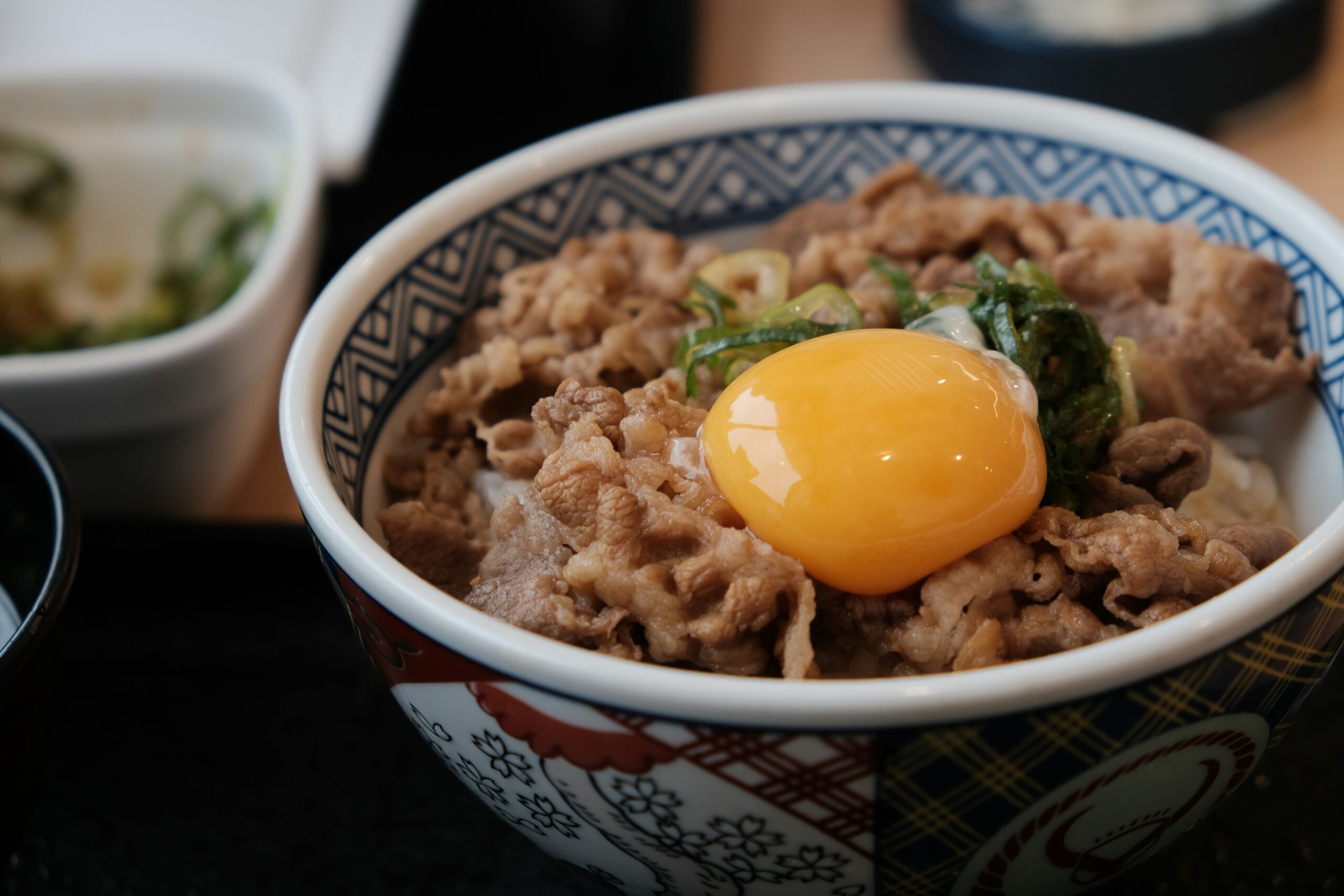
When people introduce Japan to the world, they often focus on the obvious things: sushi, ramen, shrines, anime, or famous tourist spots. But sometimes, the most interesting parts of Japan are found in much more ordinary places.
One example is Yoshinoya.
Yoshinoya is one of Japan’s most familiar gyudon chains. Gyudon is a bowl of rice topped with thinly sliced beef and onions simmered in a sweet-savory sauce. It is not luxury food. It is not exactly home cooking either. It is closer to an everyday meal that people eat outside when they want something quick, cheap, and filling.
For many people in Japan, Yoshinoya is not a place for a special occasion. It is a place for lunch during work, dinner on the way home, a quick meal when there is no time, or something to eat late at night. It has long been part of everyday life.
That is why Yoshinoya used to have a very clear image.
A man enters alone.
He sits at the counter.
He orders a beef bowl.
He eats quietly.
He leaves quickly.
Fast, cheap, and filling.
That was Yoshinoya’s strength.
At the same time, that image was also very male. Beef bowl restaurants were often seen as places where office workers, laborers, students, and single men could finish a meal quickly. They were efficient places to eat, not necessarily bright, relaxed places where women or families would spend time.
But today, Yoshinoya feels a little different.
According to an article in PRESIDENT Online, Yoshinoya spent many years trying to make its restaurants more welcoming to women and families. This was not simply a matter of adding “women-friendly” menu items. The company had to gradually change the atmosphere of the stores, the sense of cleanliness, the menu, the way customers used the space, and even how the customer base appeared from the outside.
This is the interesting part.
A beef bowl restaurant is a very ordinary place in Japan. It is not a tourist destination. It is not a special cultural experience. But by looking at how such an ordinary restaurant has changed, we can see how Japanese society itself has changed.
A dining space that once felt centered on men has become more open to women, students, and families. A place where people simply ate quickly and left has become a place where some people can stay a little longer. A restaurant known for being cheap and fast now also has to think about health, cleanliness, and comfort.
This is different from the usual image of “Japanese food” seen from overseas.
When people talk about Japanese food, they often mention sushi, tempura, ramen, or wagyu beef. But everyday life in Japan is also supported by chain restaurants, supermarket deli foods, convenience store bento, frozen meals, and family restaurants.
These places are not polished for tourists. They are places where people actually live.
Yoshinoya’s change is not only a story about a beef bowl chain changing its image. It is also an example of how ordinary spaces in Japan slowly change with the times.
For people outside Japan, the idea of high school girls doing homework in a beef bowl restaurant may seem a little surprising. But that small sense of surprise is exactly what makes it interesting. It shows a piece of everyday Japan as it exists now.
Reference:
PRESIDENT Online, “10年半かけて『男子の店』を『女子高生が宿題する店』に…吉野家が女性客を2.5倍に増やせた本当の理由”
https://president.jp/articles/-/113635

コメント