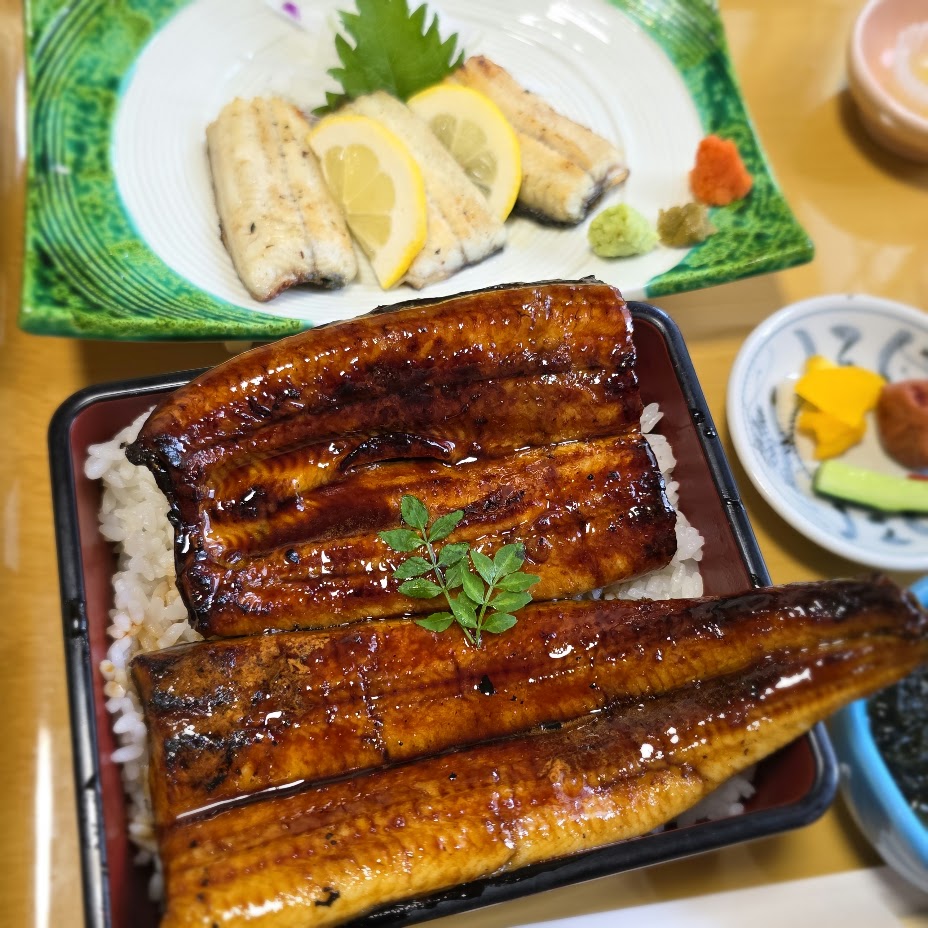
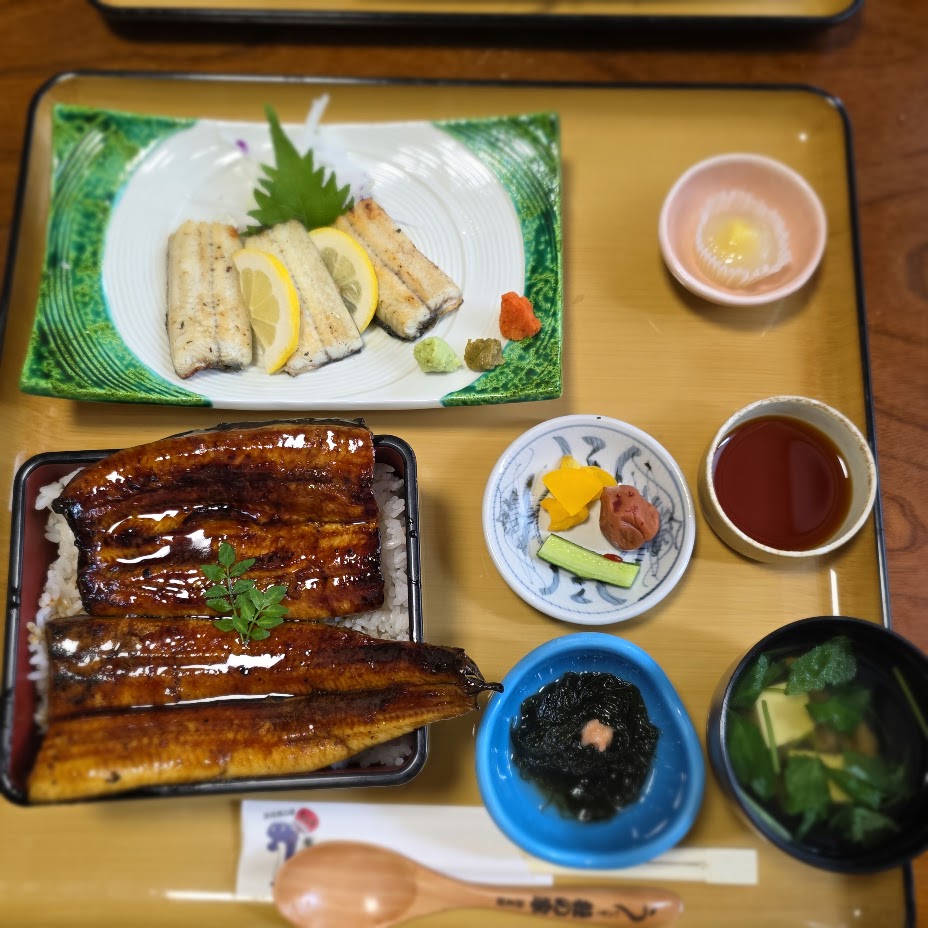
I ate unagi at Lake Hamana.
Unagi is freshwater eel, usually grilled and served with a sweet soy-based sauce over rice. In Japan, this dish is not just “grilled fish.” It carries a lot of cultural weight.
It is rich, glossy, fragrant, and slightly luxurious. It is something people eat on special days, during travel, at old restaurants, and in summer. A box of unagi over rice can feel both simple and ceremonial at the same time.
More Than Just Eel on Rice
The dish I ate was unaju: grilled eel served over rice in a lacquer-style box. The sauce soaked into the white rice underneath, making the rice almost as important as the eel itself.
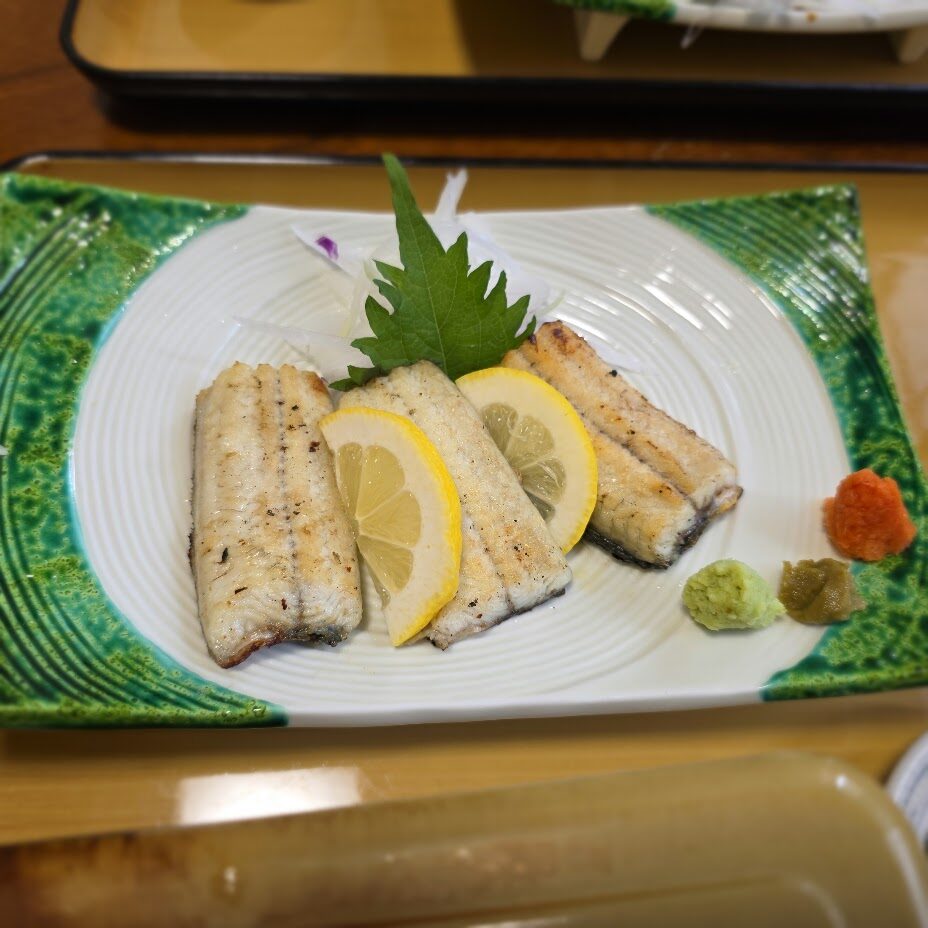
There was also shirayaki, eel grilled without the sweet sauce. It is paler, simpler, and usually eaten with condiments such as wasabi or citrus. If unaju is about sauce, smoke, and rice, shirayaki is more about the taste of the eel itself.
This contrast is very Japanese to me.
The same ingredient is not treated in only one way. It can be sweet and rich. It can be plain and delicate. It can be eaten with rice, with soup, with pickles, and with small seasonal-looking side dishes. The whole meal becomes a quiet arrangement of flavor, texture, and form.
Why Lake Hamana Matters
Lake Hamana, in Shizuoka Prefecture, is strongly associated with unagi.
The region has a long history of eel farming, and “Hamana Lake eel” is still a phrase many Japanese people recognize. Eating unagi there feels different from eating it anywhere else. It becomes connected to place.
This is common in Japanese food culture. A dish is not only about the ingredient. It is also about where it is eaten.
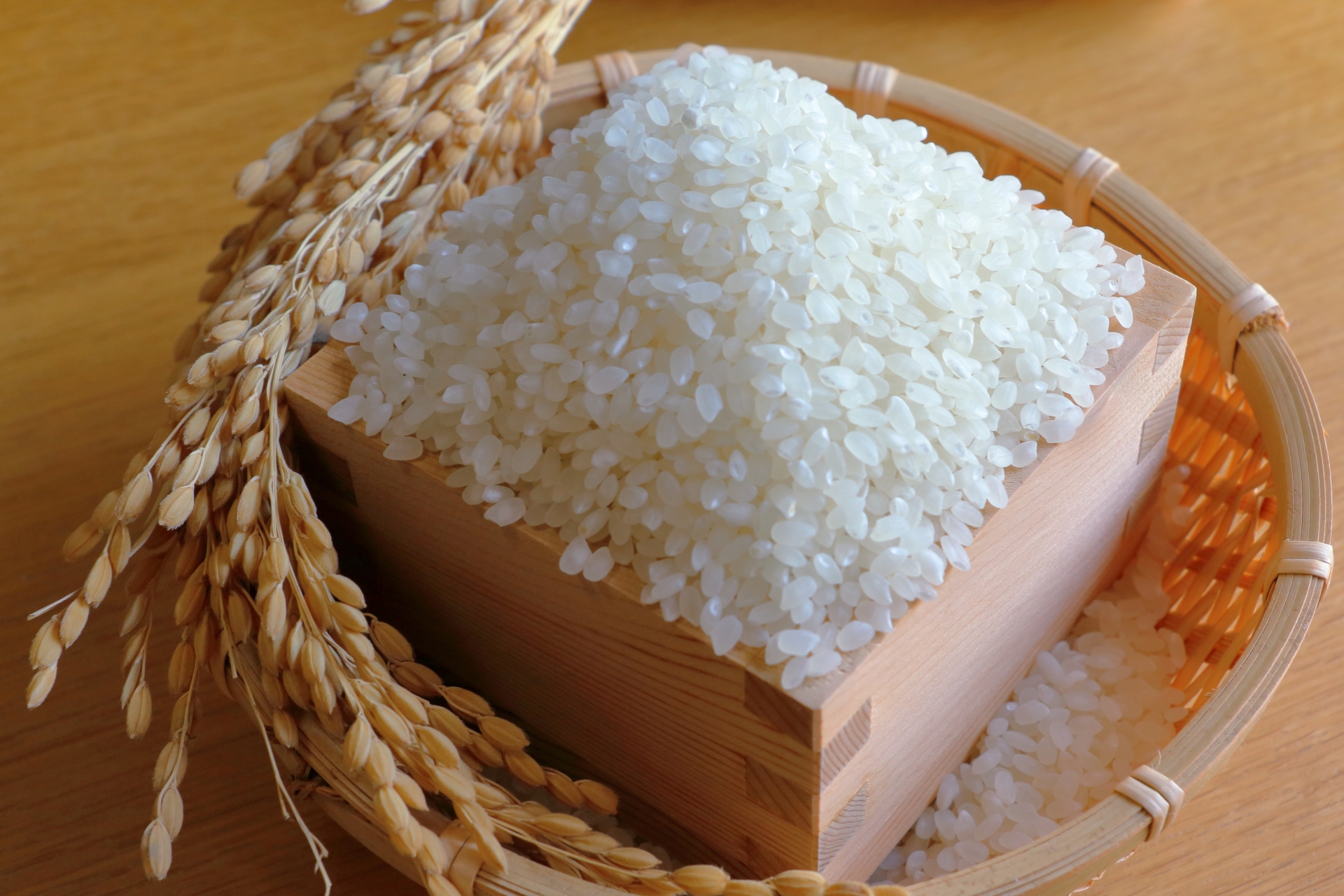
Rice from one region.
Tea from one region.
Sake from one region.
Eel from Lake Hamana.
The place becomes part of the taste.
The Day of the Ox
Unagi is also strongly connected to Doyo no Ushi no Hi, the “Day of the Ox” during the summer doyo period.
In modern Japan, many people associate this day with eating eel. Supermarkets, restaurants, and advertisements all remind people that summer is unagi season.
The origin story is often linked to the Edo period. One famous version says that the scholar and inventor Hiraga Gennai helped promote eel on the Day of the Ox as a clever commercial idea. The details are debated, but the story itself is very Japanese: food, season, wordplay, health, and marketing all mixed together.
Today, many people no longer think deeply about the origin. They simply know that summer means unagi.
The Uncomfortable Part
But unagi also has a difficult side.
Japanese eel has been under serious resource pressure. It is not simply an unlimited traditional food. For years, people who like unagi have also had to hear the question: should we still be eating this?
That makes unagi different from many other everyday Japanese foods.
It is delicious.
It is traditional.
It is expensive.
It is culturally important.
And it is also uncomfortable.
This tension is part of the modern unagi story.
Complete Aquaculture May Change the Future
In recent years, complete aquaculture of eel has become a major topic.
Traditional eel farming depends on catching wild glass eels and raising them. Complete aquaculture means producing eel through the full life cycle under human management, without depending on wild young eels in the same way.
If this becomes stable, scalable, and economically realistic, it could change how people think about eating unagi.
Unagi may become something people can enjoy with less hesitation. Not because tradition alone makes it acceptable, but because technology may help reduce pressure on wild resources.
This is an interesting Japanese pattern: an old food culture being protected by modern research.
The future of unagi may not be only in old restaurants, charcoal grills, and lacquer boxes. It may also be in laboratories, hatcheries, breeding tanks, and years of difficult biological research.
A Very Japanese Food
Unagi feels very Japanese because it gathers many things in one meal.
Rice.
Sweet soy-based sauce.
Seasonal customs.
Regional identity.
Summer fatigue.
Old restaurants.
Resource anxiety.
Aquaculture technology.
A quiet sense of luxury.
It is not just food from the past. It is food caught between tradition and the future.
When I ate unagi at Lake Hamana, it felt like a beautiful meal. But it also felt like a meal with a long story behind it.
That may be why unagi remains so powerful in Japan.
It is delicious, but not simple.
And perhaps, if complete aquaculture continues to improve, one day people may be able to eat it with fewer doubts.
Until then, unagi is still one of Japan’s most complicated ordinary luxuries.
コメント